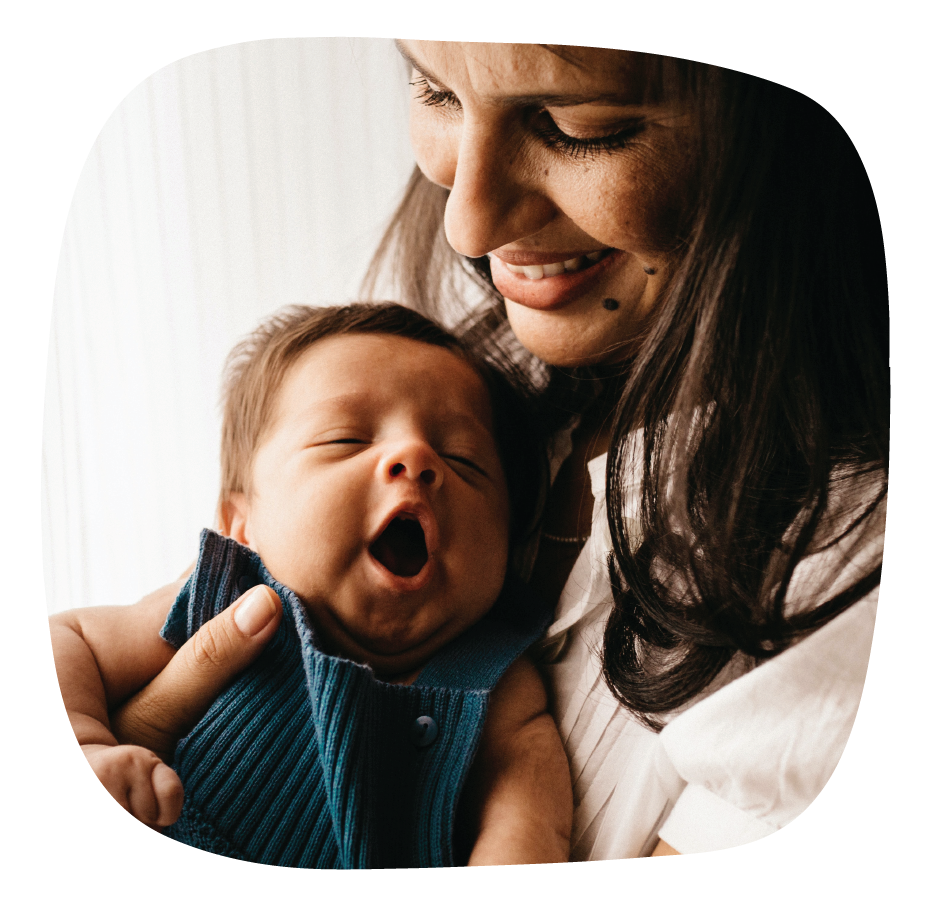
“There Is No Magical Switch —It Takes a Village”
By Thelma Ramirez, Ed.M
“You’re going to be such a good mother.”
Versions of this well-intentioned message came through texts and calls over and over again as I shared the news that I was expecting a baby. And I believed these words because, distant as giving birth still felt, I already loved my baby. I prepared her nursery to ensure she had everything she could possibly need. I read the parenting books, and I attended the birthing classes. I was ready to meet her and to fall in love with her in person like I had seen in the movies and heard about from friends and family.
Romina arrived at 6:17 a.m. In her notes, my obstetrician wrote that “with excellent maternal effort” I had “delivered a vigorous female infant.” And Romina was indeed a vigorous infant. I was so happy to meet her and relieved she had all 10 fingers and toes. But I was also tired and in pain and could not wait to get some sleep. As this thought came to me, the guilt began. Shouldn’t I want to hold my baby and look at her for hours on end? What would Dr. Stephely say if I told her I would rather sleep than try to nurse again? Was I a bad mother for even thinking this?
The feelings of worry and guilt continued and multiplied when we took Romina home. She, like all babies, had lost a percentage of her weight from when she was born, and my partner and I, like all new parents, were tasked with bringing her weight back up within the next two weeks.
“Parenting doesn’t come with an instruction manual. You will figure it out as you go.”
This message is another we had heard over and over again, but it felt conflicted. If there is no manual, then how do we figure it out? Will something (like a switch) suddenly flip within me? And if there is no manual, why all the books and the childbirth and parenting classes?
Manual or not, we welcomed all the guidance, knowledge, and recommendations from professionals and family around us. Sleep-deprived, at 2 a.m. I would go back to my notes from the books I read and the classes I attended, hoping for something to help me “figure it out.” Keeping the baby fed felt like the hardest thing I had ever encountered in my life. Nursing did not come easily to me or my baby, and the pain I experienced was so excruciating that I would find myself crying along with her as she wailed, hungry. Romina’s weight did not go back up as quickly as her pediatrician would have liked, and she recommended that I begin supplementing with formula after her one-week well visit. As I read through the various formula can labels in the baby aisle at the store, I could not help but feel like a failure. Was I a bad mother because I could not feed my baby what she needed to thrive?
“It takes a village to raise a child.”
The truth is that we somehow survived those first few weeks, but it was not because of a magical flip of a switch within me or even the classes I took. There was no magic switch, but there was my sister Rosa, a mother of five, who came to stay with me for a few weeks. From Rosa, I learned that the best way to burp Romina was to sit her on my lap and pat her back as I held her chin. I had watched burping videos, but seeing an experienced mother in action helped me master the technique that worked best for my baby. And after Rosa left, my partner’s mother, Zahra, came to help from Iran.
From Zahra, I learned that what woke and kept Romina up more than normal was likely the temperature of the room. Zahra would check Romina’s body temperature by feeling the back of her neck, and because she and I did not share a common language — she spoke Farsi, and I English and Spanish — Zahra would take my hand so I could feel what she felt. With Zahra there, I was now able to take naps during the day while Romina was cared for, and I did not have to worry about cooking a healthy meal or staying on top of the growing laundry piles. I was so grateful for Zahra, and we often understood each other without words.
I also began seeing an incredible lactation consultant, Meghan, who worked with me and the baby a few hours a week. From Meghan I came to understand that I was feeding my baby, that formula is a scientific miracle, and that what I was doing was enough. Meghan came at the perfect time in my life. While I had sought her out because I was desperate to find a way to exclusively nurse, she helped me reflect on the whys of my goals and she taught me that truly “fed is best.” Time and time again, Meghan would remind me that lactation consultants exist precisely because nursing is not easy and natural for many mothers and it takes time, support, and practice. With Meghan’s help, I was able to get Romina up to a healthy weight.
I survived those first few weeks, thanks to my network of support. Rosa, Zahra, Meghan, my neighbors, and countless others who offered both concrete and emotional support.
When people told me I’d be a good mother, I thought they were seeing something I didn’t yet see in myself. What I didn’t understand was that I would need others to help me grow into it. Being a good parent isn’t just born in you. It’s built in the presence of people who show up. Rosa, Zahra, Meghan. My neighbors. The village. We live in a time that tells us we should be able to do this alone, that needing help means something is wrong with us. But those first weeks taught me the opposite: We cannot do it alone. It takes a village.
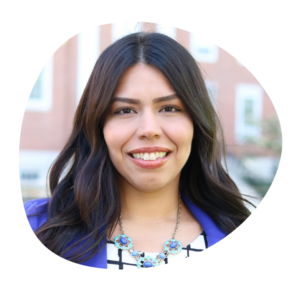
Thelma Ramirez, EdM, is a research manager at Harvard’s EASEL Lab, where she supports the equity-focused efforts of several projects. Her research interests include family engagement in social and emotional learning (SEL), culturally responsive pedagogy, and the intersection of equity and SEL interventions — all in an effort to ensure and foster inclusive and safe learning spaces for students of all backgrounds. Prior to her work at the EASEL Lab, Ramirez served as a parent educator, infant family specialist, and home visitor trainer. Ramirez has an AB in sociology from Princeton University and an EdM in prevention science and practice from the Harvard Graduate School of Education.
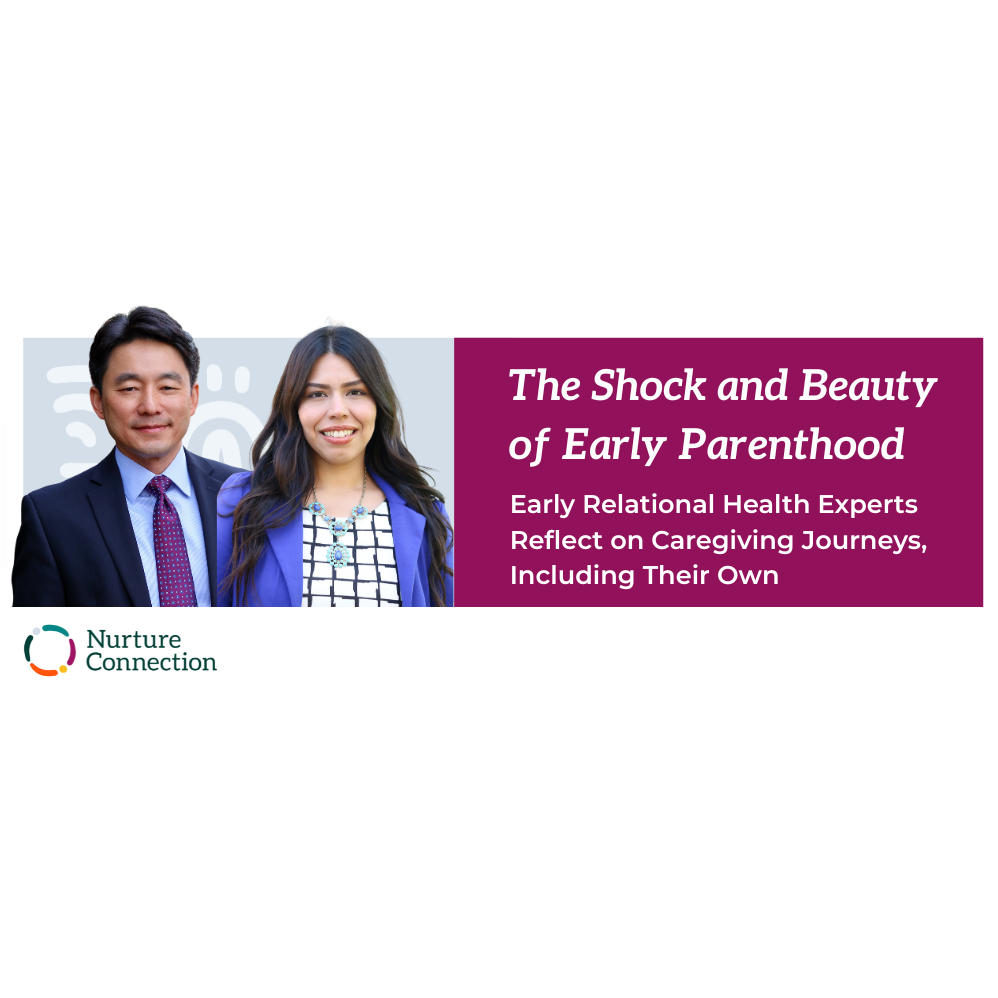
“The Shock and Beauty of Early Parenthood”: Early Relational Health Experts Reflect on Caregiving Journeys, Including Their Own is a collection of stories from Nurture Connection, a national catalytic network devoted to promoting strong, positive, and nurturing early relationships to build healthier, more connected communities.
The stories are written by Thelma Ramirez, Ed.M, and Dr. Junlei Li, PhD, of Harvard University, who both work in the field of early childhood and relational health and who are both parents themselves. These narratives offer an intimate glimpse into how skilled early relational health practitioners help families navigate the challenges of parenting, sharing their own obstacles along the way.
Read the Full Series

“We Were Not Meant to Do This Alone”: Why We’re Reflecting on Our Own Parenting Journeys by Junlei Li, PhD & Thelma Ramirez, EdM
“Fathers Are Fathers – And So Much More” by Thelma Ramirez, EdM
“You and Your Child: How Many Interactions Are Enough?” by Junlei Li, PhD
“There Is No Magical Switch — It Takes a Village” by Thelma Ramirez, EdM
“Where Is My Maternal Instinct?” by Thelma Ramirez, EdM
“Do Fathers Need to Have Paternal Instincts?” by Junlei Li, PhD