“Early Relational Health (ERH) work demands that practitioners are fully present, wholeheartedly engaged, and authentically committed to the relationships they create with families and communities” says David W. Willis, MD, FAAP, founder and director of Nurture Connection and a professor of pediatrics and psychiatry at Georgetown University. As Jeree Pawl reminds us, “How you are is as important as what you do” — a principle that calls ERH leaders to ongoing self-reflection about how their own experiences, emotions, and ways of being shape their authentic partnership with families and their young children.
The stories that follow were written by Thelma Ramirez, EdM, and Junlei Li, PhD, of Harvard University, who both work in the field of early childhood and relational health and who are both parents themselves. These intimate narratives, Dr. Willis says, offer glimpses into how skilled ERH practitioners “navigate this integration of personal presence and professional practice, revealing the stories of themselves as they consider their relationships with children and families.”
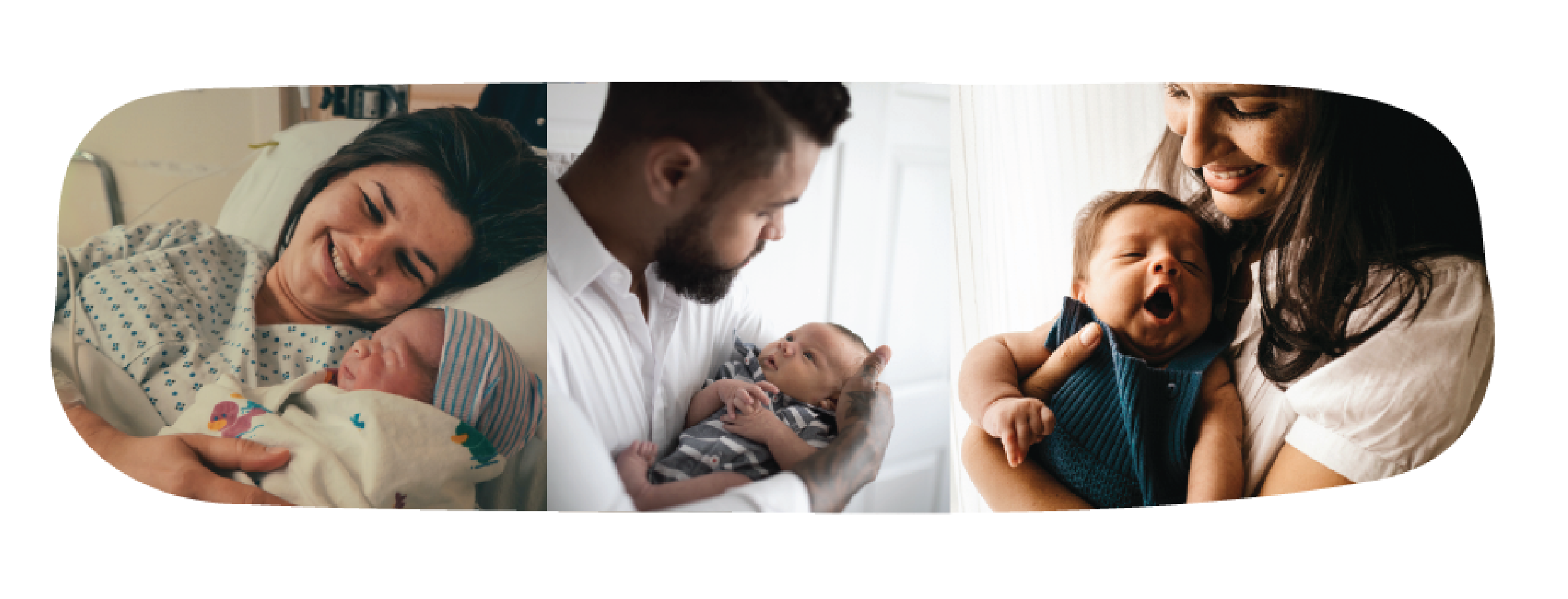
“We Were Not Meant to Do This Alone”: Why We’re Reflecting on Our Own Parenting Journeys
By Junlei Li, PhD, and Thelma Ramirez, EdM
These pieces began in a place that might sound familiar to many of us in early childhood and family services: in reports.
In 2023 and ’24, we worked with colleagues and partners on two related projects — Early Relational Health: A Review of Research, Principles, and Perspectives and Applying Insights from Human Connection and Co-Regulation: Supporting Fathers in Human Services Programs. We interviewed parents, caregivers, and early childhood professionals. We listened to stories about nurses who became the one person families could lean on during birth, fathers waiting in cars outside “family nights” unsure if they belonged, and caregivers wondering quietly, am I doing enough for this child?
The lessons of these stories shaped our reports, but the stories themselves didn’t fit inside reports.They were too personal, too specific, or too layered to tuck into a figure or a footnote. At the same time, our work was stirring up our own caregiving experiences. Thelma was preparing to give birth and then navigating the shock and beauty of early parenthood. Junlei was reflecting on his adoptive fatherhood from years earlier, remembering social workers, fellow adoptive families, and the joyful and sometimes uncertain journey of becoming “Dad.”
We found ourselves asking:
- Where can all of these stories go?
- How do we connect Early Relational Health (ERH) principles with the everyday lives of parents, caregivers, and practitioners?
Nurture Connection’s Caregiving Ambassador role, overseen by the Thrive Center for Children, Families, and Communities at Georgetown University, gave us the space — and the nudge — to try.
The writings in this series grew out of that space. They braid together what we have heard in homes, clinics, and community programs with what we have lived in our own families. They explore familiar questions:
- What does it mean to be “enough” as a parent, caregiver, or professional?
- Where is my “maternal instinct” if I don’t feel an instant bond?
- How do fathers come to feel like fathers — and what if the connection doesn’t come right away?
- How many interactions are enough when life is busy, complicated, or simply hard?
Across these essays, a few themes repeat. Early Relational Health is not an abstract or new concept. It lives in the ordinary moments — a new parent burping their newborn at 2 a.m., a neighbor teaching a child to ride a bike, a father fixing a broken toy after work, a home visitor sitting with a mother who doesn’t yet “feel like a mom.”
We also return again and again to this understanding: The capacity to care is real, but none of us is meant to do this alone. Parents and caregivers grow into their roles in the presence of others — siblings, nurses, partners, home visitors, social workers, neighbors, grandparents, and peers who show up in big and small ways. The same is true for many professionals; we, too, need villages and “parallel relationships” that sustain us as we support families.
Our hope is that these reflections will resonate with parents and caregivers, with home visitors and providers, with researchers, funders, and leaders across the Early Relational Health ecosystem. We hope they will help humanize the science behind ERH, ease some of the quiet guilt so many people carry, and reinforce the heart of an Early Relational Health message: None of us is meant to do this alone.
Most of all, we hope these pieces serve as an invitation. An invitation to remember the people who have been your village and the people for whom you have been a helper. To notice the small, everyday interactions that make up Early Relational Health. And, if you are willing, to add your own stories — about what Early Relational Health has meant in your life and work — to this growing conversation.
— Junlei Li & Thelma Ramirez
Hear more from Junlei and Thelma about their inspiration for the series, in their own words.
 Junlei Li, PhD, is the Saul Zaentz Chair in Early Childhood Education at the Harvard Graduate School of Education as well as a Nurture Connection Steering Committee member. He has previously talked with us about principles of ERH; the essentiality of centering connection, growth, and healing in relationships; and how discord can be a pathway for relational repair, growth, and healing — both within ERH and this present moment. His research and practice focus on understanding and supporting the work of helpers — those who serve children and families on the front lines of education and social services. Dr. Li studied and learned from a wide range of developmental settings with low resources but high-quality practices, including orphanages, childcare, classrooms, and community youth programs. He developed the Simple Interactions approach to help identify what ordinary people do extraordinarily well with children in everyday moments and made that the basis for promoting positive system change.

Thelma Ramirez, EdM, is a research manager at Harvard’s EASEL Lab, where she supports the equity-focused efforts of several projects. Her research interests include family engagement in social and emotional learning (SEL), culturally responsive pedagogy, and the intersection of equity and SEL interventions — all in an effort to ensure and foster inclusive and safe learning spaces for students of all backgrounds. Prior to her work at the EASEL Lab, Ramirez served as a parent educator, infant family specialist, and home visitor trainer. Ramirez has an AB in sociology from Princeton University and an EdM in prevention science and practice from the Harvard Graduate School of Education.
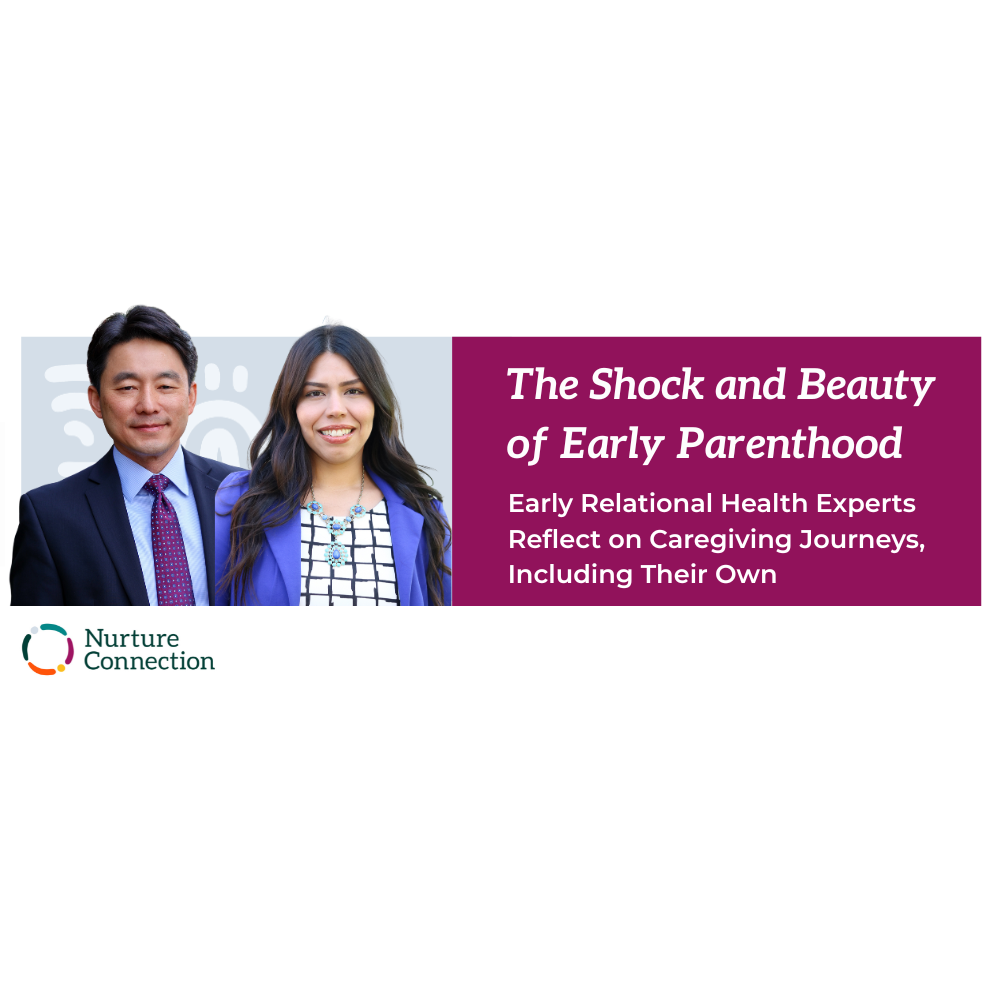
“The Shock and Beauty of Early Parenthood”: Early Relational Health Experts Reflect on Caregiving Journeys, Including Their Own is a collection of stories from Nurture Connection, a national catalytic network devoted to promoting strong, positive, and nurturing early relationships to build healthier, more connected communities.
The stories are written by Thelma Ramirez, Ed.M, and Dr. Junlei Li, PhD, of Harvard University, who both work in the field of early childhood and relational health and who are both parents themselves. These narratives offer an intimate glimpse into how skilled early relational health practitioners help families navigate the challenges of parenting, sharing their own obstacles along the way.
Read the Full Series

“Fathers Are Fathers – And So Much More” by Thelma Ramirez, EdM
“You and Your Child: How Many Interactions Are Enough?” by Junlei Li, PhD
“There Is No Magical Switch — It Takes a Village” by Thelma Ramirez, EdM
“Where Is My Maternal Instinct?” by Thelma Ramirez, EdM
“Do Fathers Need to Have Paternal Instincts?” by Junlei Li, PhD