The state is training not only childcare workers but also pediatricians, teachers, and caregivers in a workforce that promotes Early Relational Health.
North Carolina is famed for its farms, research centers, and natural beauty, including the Great Smoky Mountains, an Appalachian rainforest, and rolling orchards and farmland. It also offers one of the country’s most comprehensive early childhood approaches to promote parent-child bonding and infant social-emotional health.
This achievement is especially striking because North Carolina has a much smaller budget per capita than the country’s wealthier states, and about 12.5% of the state’s population lives in poverty. Nonetheless, the state has surpassed many others by integrating Early Relational Health (ERH) into its healthcare system, including promoting mental health for children from birth to age 5.
Early Relational Health “is all about those connections and relationships with grown-ups in a child’s life,” says Kelsey Smith, executive director of the North Carolina Infant and Early Childhood Mental Health Association (NCIMHA). “How do you create a secure attachment and set a child up for success? You nurture them.”
Since its founding in 2011, the 449-member association has trained and endorsed more than 180 infant and early childhood mental health (IECMH) professionals in North Carolina, with most of the infant mental health workforce training taking place after 2021. What distinguishes NCIMHA’s workforce program from many others in infant and Early Relational Health is that it aims to train and credential not only childcare workers, social workers, and parent coaches but also teachers, pediatricians, and anyone else who regularly interacts with young children.
“At NCIMHA and in infant mental health, we think of ‘caregiver’ more broadly to include not only parents but other grown-ups that a child interacts with, including teachers and pediatricians,” Smith says. “We want to recognize what you as a professional can do with the young children and families you work with that promotes healthy, safe relationships.”
Since the infant mental health and Early Relational Health programs have the same goal — helping children build nurturing connections in their earliest years — the core of both disciplines is one and the same.
“Ultimately, what we want to do is unite folks, cross-disciplinarily, around IECMH concepts — the lens of infant mental health, Early Relational Health, or social-emotional development — whatever you call it — using the same language and ideas so that we can better support the children who we work with,” Smith says. “Sometimes one family is involved in a lot of different systems, and it’s important that those professionals have some alignment around best practices for working with those young children and their families.”
Nurturing the Roots of Connection
Connection takes many shapes and forms but is ultimately rooted in relationships. In many ways, the working relationship between Ellie Erickson, MD, FAAP, IMH-E®, a pediatrician and an assistant professor of pediatrics at Duke University who works closely with Smith, an infant mental health specialist, embodies the goal of integrating this relational framework into the workforce.
As a general pediatrician, Erickson got involved with North Carolina’s Early Relational Health work through Reach Out and Read, an early childhood literacy program that serves 4.8 million people across the United States.
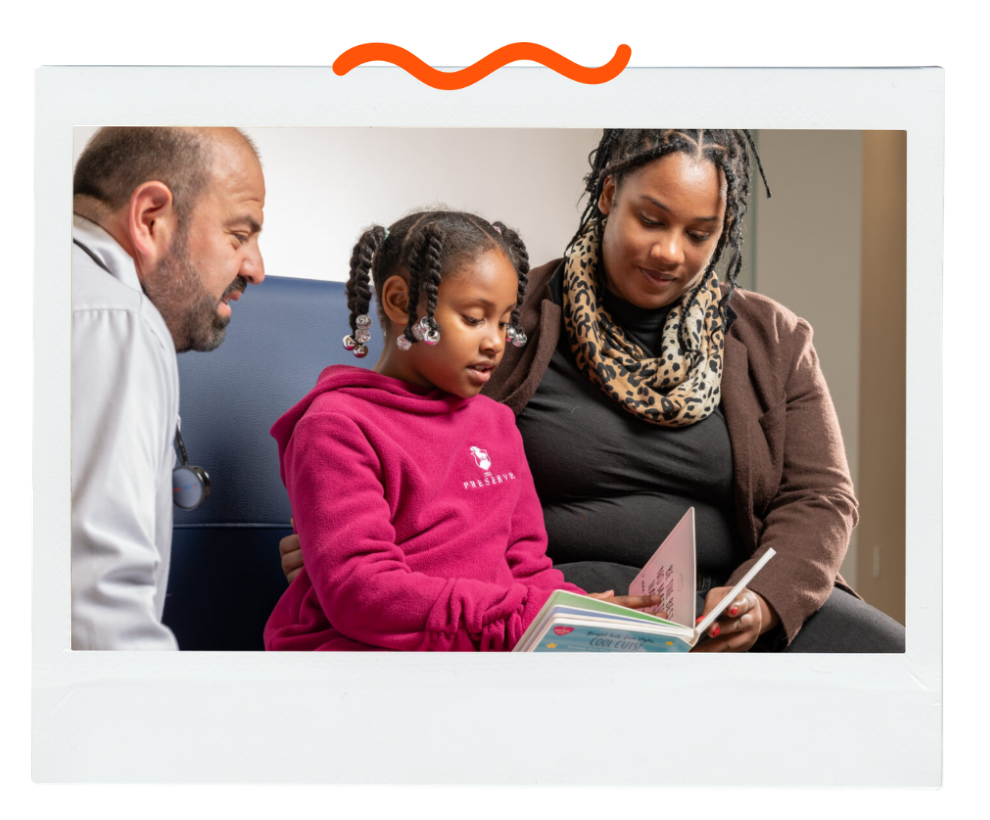
“My parents are book editors, so books and reading were a really big part of my life as a child,” she says. When she ended up in medical school, planning to be a pediatrician, she was gratified to find out about Reach Out and Read, which encourages families to read together — a program that is housed in pediatric primary care offices.
“The way the program was introduced to me was, ‘Did you know that the majority of children are not read to on a regular basis?’ And I thought, ‘Oh, God, what a tragedy.’ Some of my best memories of childhood are of reading with my parents,’” she says. “For children to be able to read with their parents in a safe, supportive environment provides moments of connection and safety for kids so that their brains feel safe, and safe brains can learn.”
Photo source: Read Out and Read website
Erickson became still more a proponent of infant and Early Relational Health when she herself had children. “I had my first baby, and suddenly everything was in Technicolor. My lived experience was the final piece that really put it all together: These moments of connection [in early childhood] are the key to everything!” Her mission, she says, is to make all pediatricians recognize the importance of that connection.
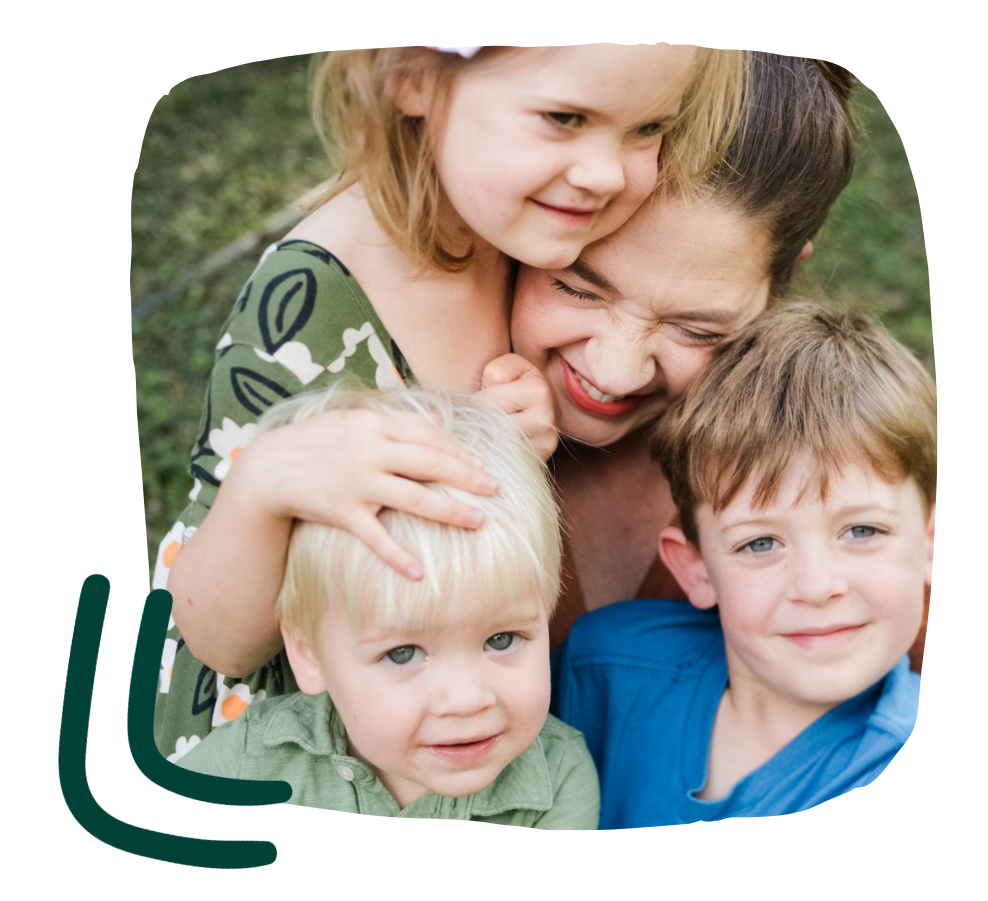 Dr. Ellie Erickson with her three children (courtesy of Ellie Erickson)
Asked how she came to be involved in Early Relational Health, Smith attributes it to her mother.
“My mother was one of the beloved teachers at a school that had kids from age 2 through 12th grade; she just retired a year or two ago. And children older than me that were in her very first class came to her retirement party. So many children over the past 40 years that she taught in preschool were there. She was that teacher. So she was this model of how to have relationships with children and their parents, but importantly, how to have relationships with parents of young children.”
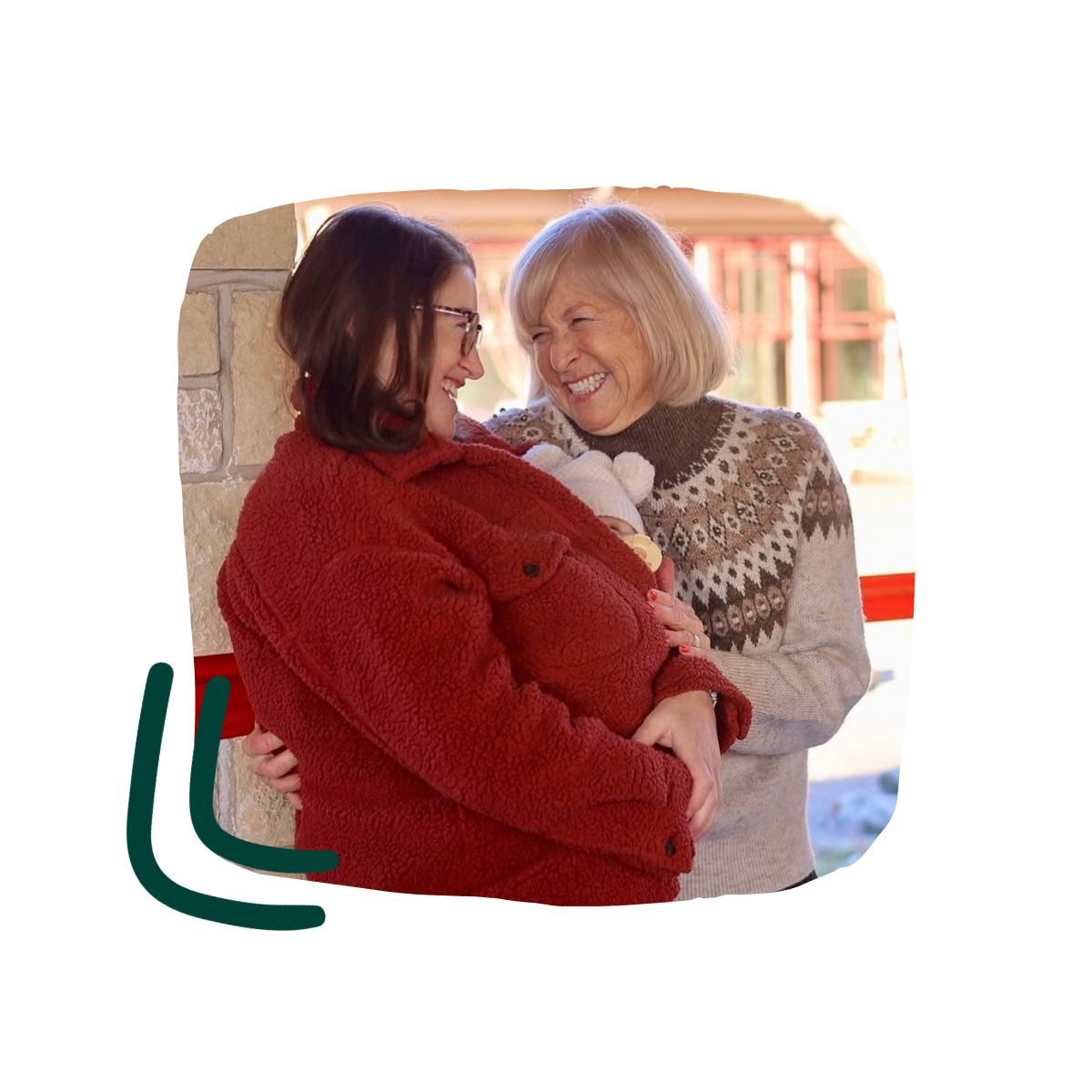
Kelsey Smith with her mom and daughter, Zoey, in December 2025, when a playground was dedicated in her mother’s honor as she retired from the preschool where she had taught for 40 years (courtesy of Kelsey Smith)
“There would be times that she would get calls at, like, 7 p.m., with parents being like, ‘I don’t know what to do: Help!’” Her mother intuitively understood infant mental health, Smith says. “She just knew what needed to be done: Don’t lecture, give a hug first. Things that promote closeness instead of punishment or distance.
“All of that is to say, supporting families and caregivers felt intuitive to me, I think because I had this fabulous parent as my model,” she continues. “I’m doing that same work to support the field — recognizing what you as a professional can do with families or with the young children you work with that promotes and creates these healthy, safe relationships so that children can go on and learn and thrive.”
Widening the Lens of Care Through Workforce Training
According to its 2025 annual report, the North Carolina Infant and Early Childhood Mental Health Association has had an impact on 621,437 children in the state and has provided hundreds of hours of collaboration. In addition, it has provided workforce credentialing, dozens of hours of in-person and virtual training, and an annual conference with 254 multidisciplinary participants.
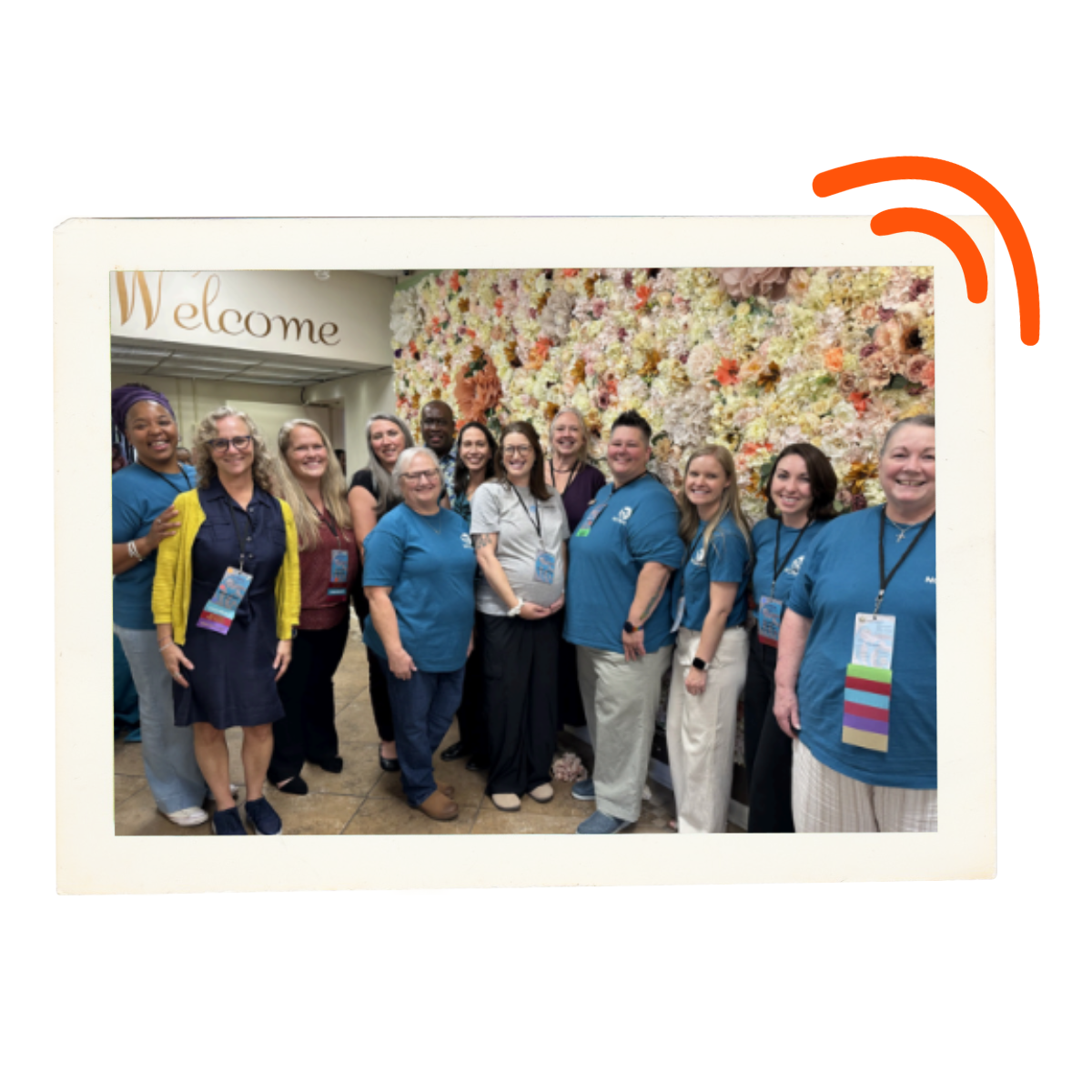
At left: NCIMHA board and staff members attend the North Carolina Infant and Early Childhood Mental Health Association’s 2025 annual conference (Source: NCIMHA annual report)
Infant and Early Childhood Mental Health (IECMH) competency guidelines and the endorsement credential are accepted in 36 states in the United States as well as Ireland and Australia, Smith adds, noting that it is a universal, standardized credential recognizing infant early childhood mental health professionals.
She also hopes to better socialize the concepts of infant and Early Relational Health in North Carolina and elsewhere through training that focuses on the importance of relationships and attachment. “If teachers are frustrated by behavior they find challenging,” she says, “how can we support them in better responding and interacting with children in their classrooms?” Besides creating more harmony, she says, this will create an opportunity for children “to feel valued, seen, heard, held — and to succeed in the classroom.”
Erickson agrees. As a general pediatrician, “I see kids from birth to 25 sometimes — I’ve got a few stragglers,” she says with a laugh. Besides working with children and infants in checkups and sick visits, she does rounds in the newborn nursery and works as a preceptor for the pediatric residents at Duke.
As if this weren’t enough, Erickson says, she has “a whole smattering of about 17 other jobs” — all related to advocacy, community engagement work, and systems alignment in infant mental health.
The central question in all of them, she says, is “‘how do we bring the lens of infant early childhood mental health, Early Relational Health, and social-emotional development into pediatric primary care?” Similar to Smith’s reflections on the early education field, Erickson notes that there is a huge gap in how pediatricians are trained, and the ways that they practice and support families. “And so my goal, my puzzle piece in this system, is to make sure that the primary care medical home is this place that is well-versed in early childhood.”
Lessons from Western North Carolina
An example of how the primary medical home can boost lessons of infant and toddler mental health is the Healthy Opportunities Pilot (HOP) in western North Carolina.
Healthcare workers know a hungry, malnourished child needs more than connection and vaccines, so HOP covers targeted, evidence-based services outside regular medical care. These include housing, transportation, food, and nutrition, including group nutrition classes, diabetes prevention programs, “produce prescriptions,” and medically tailored meals, as well as mental health services involving toxic stress. The services pay for themselves through reduced emergency room calls and chronic disease management, as well as better mental and emotional health for families and children.
The HOP program is on hold for funding reasons at this time, but the evidence for funding these programs is compelling, Erickson says: It shows how food, housing, and other nonmedical drivers of health can be rolled out in Medicaid policy, resulting in substantial cost savings and improved health. A gold standard multiyear evaluation from University of North Carolina’s Center for Health Services Research shows:
- $164 per beneficiary per month in reduced Medicaid costs ($1,968/year), net of program costs
- 31,597 people enrolled across three pilot regions
- Significant shifts in healthcare use: fewer emergency department visits and inpatient admissions, more outpatient care
- 89% of surveyed participants reporting that HOP improved their health
- Documented reductions in food insecurity, housing instability, and transportation barriers
In June 2025, state senators approved $30 million in stopgap funding for the program; however, the proposal failed because the measure was not listed on a bill by the House. After being paused for more than a year, the HOP program was revived in 2026 through $25 million earmarked for it in the state budget.
Transforming the Early Childhood Workforce — by Investing in Relationships
Smith is eager to train teachers and social workers but notes that the economy makes it challenging when it comes to supporting early childhood workforce sustainability and capacity.
“Teachers aren’t staying in the field; child welfare folks aren’t staying in the field,” she says. “But we can help them feel supported in their work and well trained and prepared to do the hard work of building these relationships with children and families.”
Erickson also notes a similar trend of workforce retention when it comes to pediatrics: “We have a workforce that’s so burned out, and we are seeing fewer and fewer people apply into pediatrics, year over year.” This can have a particular impact on more rural parts of the state, where families already have a lack of access to a pediatrician, she notes.
Yet advancements in medicine may also open the door for pediatricians to spend more time tending to children’s mental and emotional health, Erickson suggests. “One of the beautiful things currently about pediatric primary care is that most of our children are healthy — physiologically healthy. But when I ask people, ‘Okay, what are we doing in pediatric primary care?’ They’re like, ‘Well, we’re giving vaccines, we’re looking at growth charts’ . . . but beyond that, we need a real overhaul, a gut check.
“There also isn’t a lot of prioritization of funding that goes to zero to 5,” she adds. “Typically, folks think that we should invest in children starting at age 5, and that’s the education space that starts when they show up to kindergarten. I certainly would advocate for our educators of these young children [under 5]. They’re not babysitters. They’re professionals, so they should be paid as such and invested in. That includes time off, benefits, professional development, and learning opportunities to understand things like promoting healthy relationships, secure attachment, and ways to create safe, supportive environments in their classroom. “We have the money. The money is there. And if it were allocated toward these systems, we could really do a lot of good.”
Erickson adds that something really missing from a lot of funding opportunities is time and space to build relationships. She and Smith had just finished a sprint of a grant, and it worked, she says, because of the strong, trusted relationships they already had in place. When it comes to advancing Early Relational Health, she says, relationships are the core to this success. “If you are trying to put together coalitions of people, there has to be time and space for there to be relationship building and connection.”

Explore More:
- Learn more in this article about Pediatrics Supporting Parents (PSP), an initiative that focuses on utilizing well-child visits as an opportunity for healthcare professionals and parents to work together to support a child’s social and emotional well-being and promote Early Relational Health (ERH) for young children.
“I think one of the things that was successful about PSP is that we understood each other better . . . there was this mutual understanding that we are all doing our best within these bigger systems.”
—Dr. Ellie Erickson, MD, FAAP, IMH-E®, Assistant Professor of Pediatrics, Duke University School of Medicine; Infant Family Associate; CPRN Faculty Associate Director; Medical Director, Family Connects Durham
This blog post is part of Nurture Connection’s “ERH in Action” series of listening and learning sessions. Our network is full of meaningful examples of people and organizations promoting ERH in their daily lives and work. Our “ERH in Action” series highlights and uplifts stories from various fields to share learnings, challenges, and bright spots in the movement.
Explore More Stories of ERH in Action:
- Inside Illinois’ Early Intervention Training Program
- Where Joy Lives on Fridays: Celebrating ERH in Action with UCSF BLOOM
- Postpartum Support International (PSI) Makes Peer Connections Core to Perinatal Mental Health
- Promoting Teen Parents’ Relational Health with GLOW Children
- Child First: How a Relational Health Focus Can Drive Practice Transformation