The Hilltop Empowerment Collective, which is based on trusting relationships and connection, aims to help families with young children give them their best start in life.
Families know what they need. Kate Brennan understands this and spends as much time as needed listening to families instead of simply relying on questionnaires to figure that out.
Brennan is the director of the Hilltop Empowerment Collective (HEC), a network of nonprofits in Pittsburgh, Pennsylvania working to improve access to resources in their communities. She had just met with a mother of three young children who had filled out an intake form at one of the collective’s neighborhood events. “The only thing she indicated on the form was that she could use some baby items, like diapers and clothing,” says Brennan, who connected her to a place that could supply them free of charge.
As she was getting to know this busy mom, Brennan also discovered that the mother urgently needed help paying an outstanding utility bill before her service was shut off after Labor Day. On top of that, the mom was looking for a job, but she had no childcare.
The problem, Brennan says, was that she couldn’t get a job until she had childcare, “and she couldn’t get childcare until she got a job.” Racing against time, Brennan put in a call to obtain a temporary stay on the shutoff notice. She also connected the young mom to Jeremiah’s Place, which is one of the collective’s partners that helps provide temporary emergency childcare.
Since partners understand the need to act quickly in an emergency, all this initial problem-solving took place within an hour rather than the days it might take a single organization – something that reflects the collective’s strong roots in the neighborhood and the 30 dedicated nonprofits that make up the Hilltop Empowerment Collective.
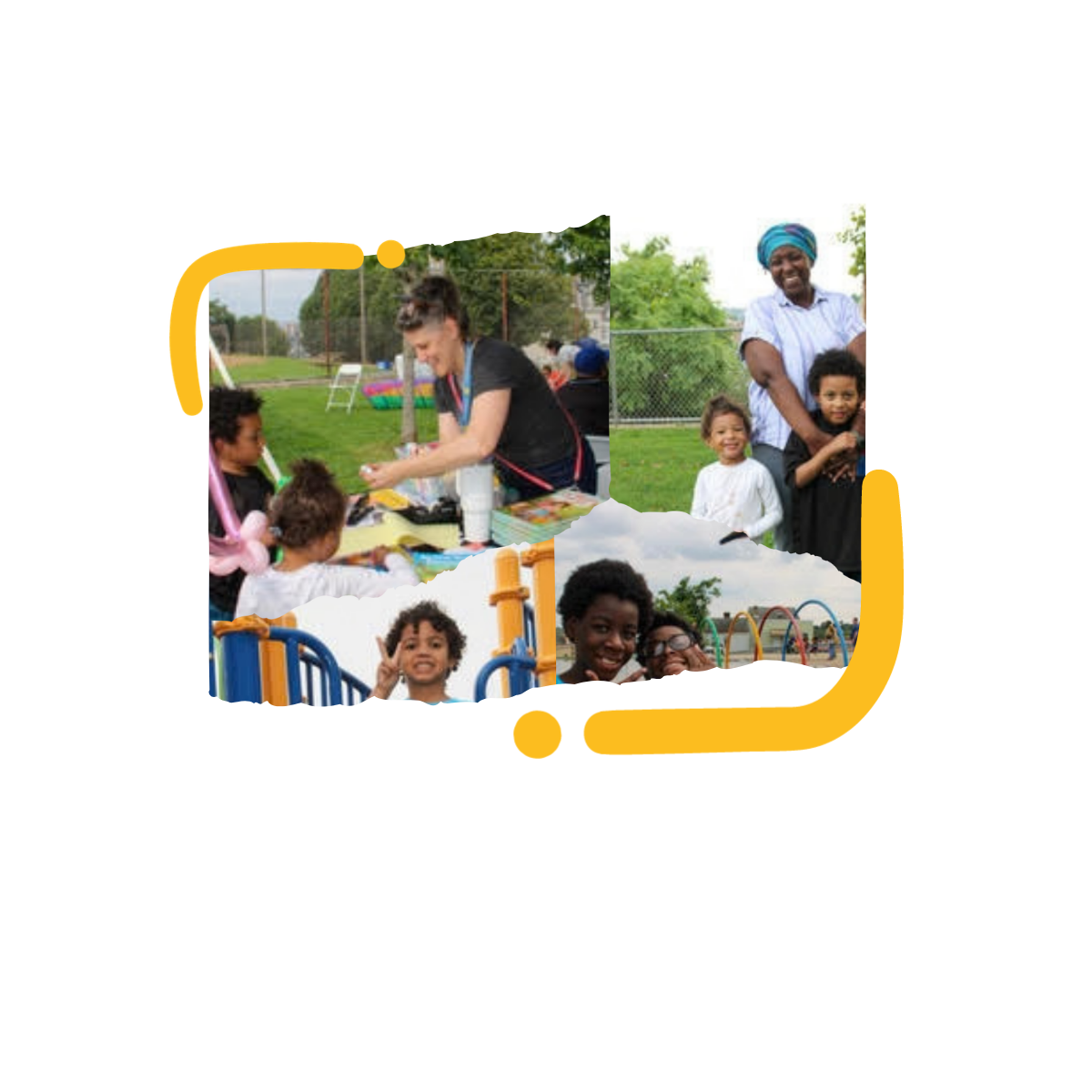
Pittsburgh families enjoy a community fun event put on by the Hilltop Empowerment Collective, in which families can eat, play games, meet neighborhood nonprofits, and take home food, diapers, books, and other supplies (Source: Hilltop Empowerment Collective)
“Like a Dream Come True”
The Hilltop Empowerment Collective (HEC) is an initiative of the Birmingham Foundation, which was created with the assets from the 1996 sale of Pittsburgh’s South Side Hospital. The foundation has a transformative process, partnering with nonprofit organizations by leading with a relational approach: The foundation acknowledges nonprofits as the helpers in the neighborhood and supports the leadership role they play. “We need and respect our partners,” says Michelle Figlar, executive director of the Birmingham Foundation. “They have the relationship with the families. They’re on the ground doing the work.” It’s an ecosystem, she says, “based on relationships and trust.”
Figlar says the foundation is small but “laser focused” on serving families and children from birth to 5 in three targeted zip codes in Pittsburgh: 15203, 15210, and 15211. Prior to Birmingham, Figlar served in a leadership role at the Heinz Endowments, a recent additional funder of the Hilltop Empowerment Collective. Figlar’s experience at Heinz paved the way for the opportunity to lead the work at the Birmingham Foundation.
“The opportunity to work with a committed board of directors to support a community-informed strategy around families with young children is like a dream come true. I pinch myself almost every day,” Figlar says.
Early in her tenure, the Birmingham Foundation board asked her an audacious question: “What game-changing investment in our neighborhoods could truly shift the trajectory for families with young children?”
Figlar, who has a strong background in early childhood education, brainstormed with her long-term collaborator, Laura Johns, a senior advisor with the Birmingham Foundation. Excited by the opportunity ahead, they worked with the board’s program committee to develop an initial proposal and recommendation for a million-dollar investment over three years. Key to the recommendation was the partnership with local nonprofits.
Birmingham is one of the smallest foundations in Pittsburgh, and the earmarked amount wasn’t a lot of money in the grand scheme of things, but the team was convinced that the nonprofits would make the most of it. As Johns shares, the foundation has a history of working with its community grantees and has built relationships based on trust and respect.
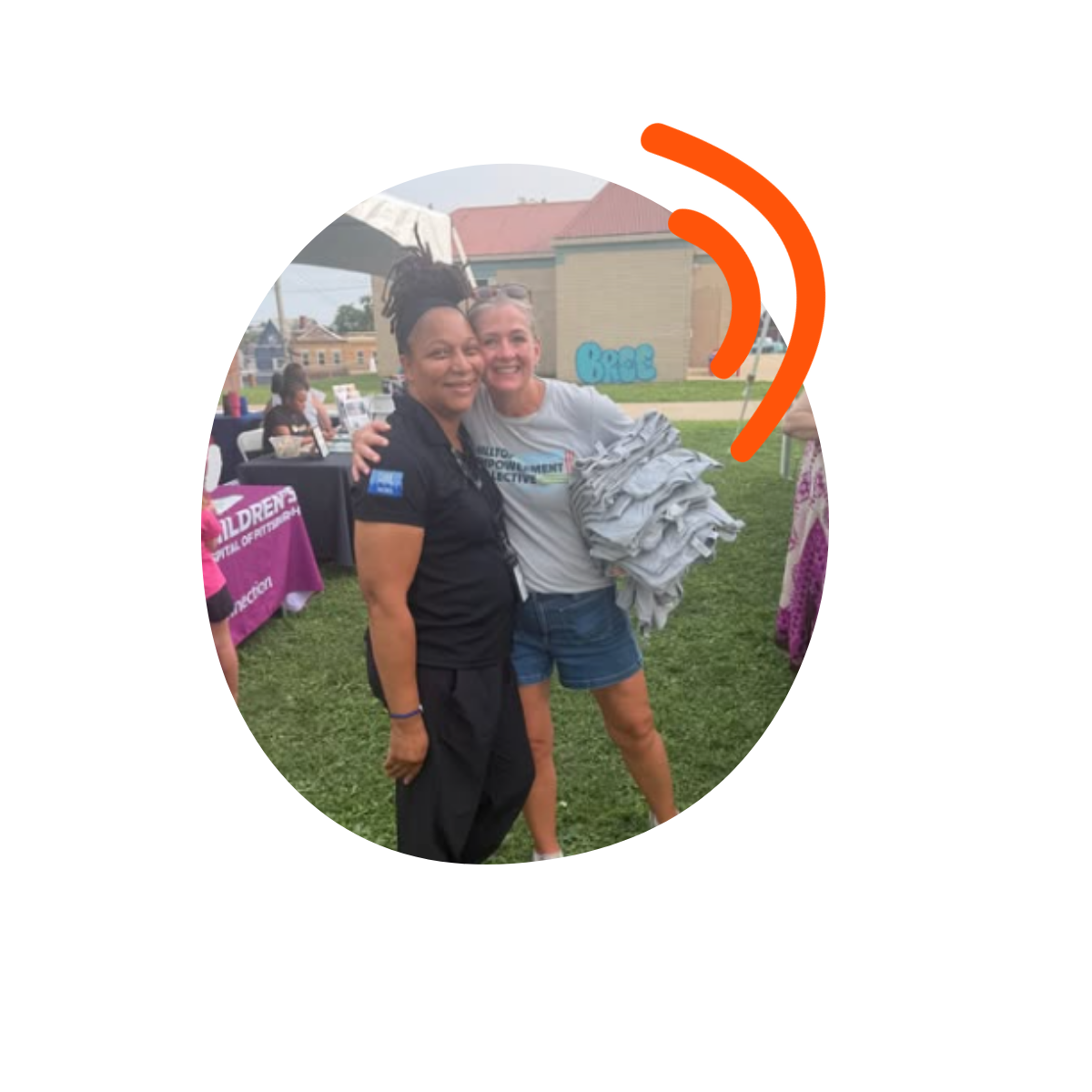
More participants at a recent family fun day (Source: Hilltop Empowerment Collective Facebook page)
“Always Look for the Helpers”
Figlar and Johns met with a group of leaders and implementers from nonprofit organizations for a year to collect information and stories about the strengths of their communities. From that conversation, the group organically moved toward their desire for opportunities to work closely together to create better access and coordinated services for the families they serve.
Johns and Figlar have both been inspired by how each nonprofit partner stepped forward to work together, ensuring families in their communities had the opportunities they need to thrive. “They were very happy to come together to develop their own strategy toward a positive change for the children and families of the Hilltop and Southside communities,” says Figlar. “Because they’re on the ground, doing the work. The HEC partners agreed that their relationships with each other as helpers was the essential ingredient to supporting families and their children in a coordinated and authentic way.”
Fred Rogers Productions, located in the Southside neighborhood, opened its doors for a pivotal gathering — a beautiful space where leaders could think, dream, and imagine beyond the usual boundaries. It was there that the nonprofit partners chose the word helpers to describe their role in the community. As Figlar notes, Fred Rogers first popularized this idea on Mister Rogers’ Neighborhood: “In times of trouble, always look for the helpers.” The phrase deeply resonated with the group.
As news of the collective spread, Johns says, “more and more community members wanted to join us around the table. This quickly grew the scope of the efforts to include workforce initiatives, housing access, emergency funds for families who need to keep their power on, and more.”

A Fountain of Support: Beverly’s PGH
Nonprofit Beverly’s PGH has been part of the Hilltop Empowerment Collective from the very beginning.
- At the collective’s family fun events, the group has distributed bedding, clothing, household supplies, diapers, and other personal hygiene items to 350 families.
- It also organizes mobile van stops offering critical infant-feeding supplies, such as infant formula and breast pumps, along with one-on-one lactation support, which allows moms to keep breastfeeding while they’re working.

“For us, Early Relational Health is about creating the conditions that allow families to be together, feel secure, and thrive. Sometimes that means providing a mother with infant-feeding support. Sometimes it means making sure a child has their own bedding. These may seem like small things, but they can make a profound difference in a family’s day-to-day life. HEC’s support has allowed [us] to turn those moments of need into moments of connection, dignity, and support.”
—Darla Sherlock, Senior Director of Programming, Beverly’s PGH
Getting the Word Out to Families
To connect families with local resources, the HEC hosts community fun days, where parents and children can enjoy family-friendly activities, free food and supplies, and free children’s books. The events also give families a chance to meet neighborhood helpers and learn about the support available through the Hilltop Empowerment Collective’s network.
Hello Neighbor, a nonprofit founding member of the HEC, works to support the newest arrivals to Pittsburgh. “We provide wraparound support for refugee and immigrant families,” says Rachel Vinciguerra, the organization’s VP of programs. She says the HEC is one of the best collectives Hello Neighbor has ever been a part of.
“First, it is rooted in the neighborhood,” she says. “It is entirely centered on getting kids the resources they need — there is no posturing or politics. It’s also made up of so many trusted organizations that when events are hosted, hundreds of families come out. I always walk away from our meetings inspired and connected.”
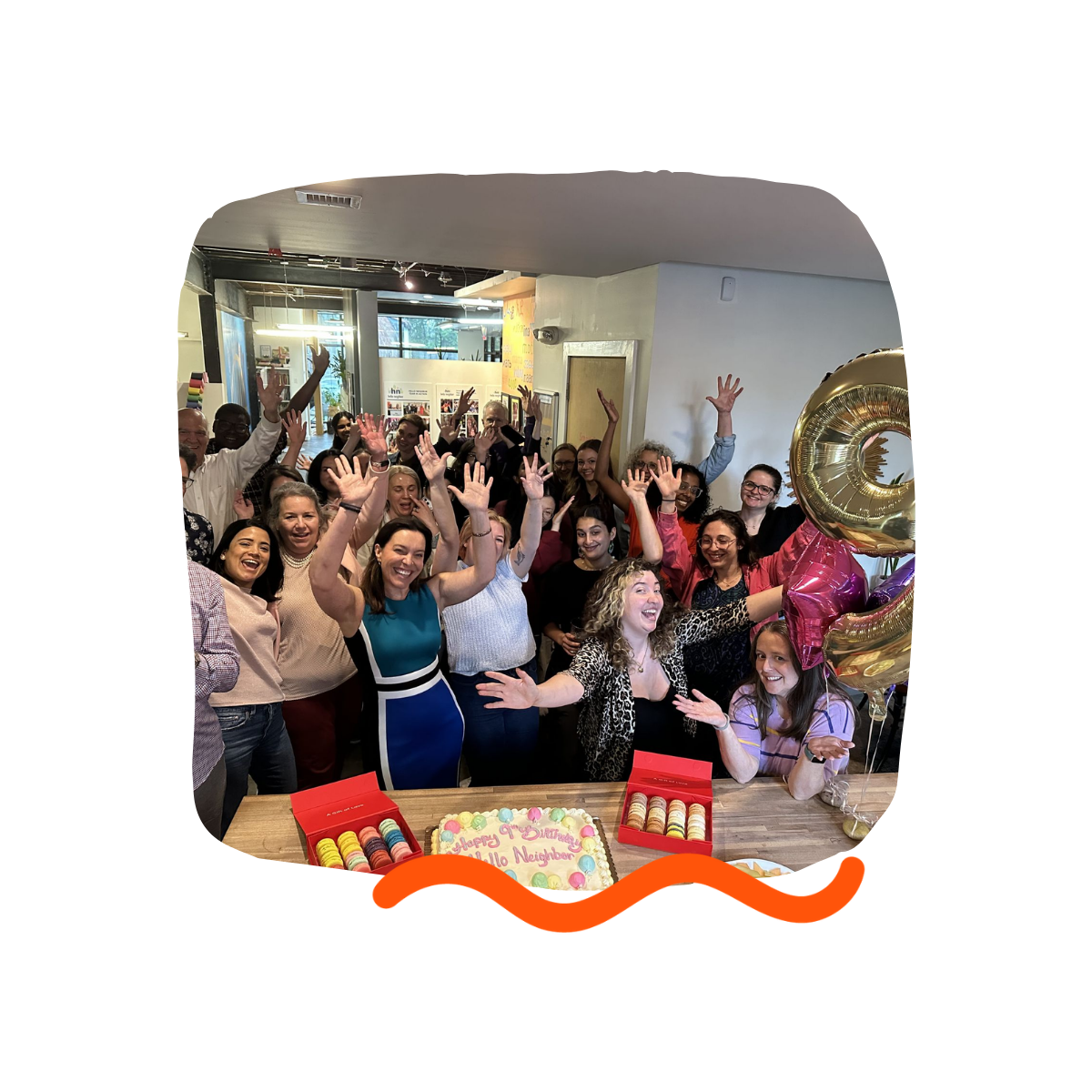
Hilltop Empowerment Collective member Hello Neighbor is celebrating its ninth year of operation (Source: Hello Neighbor).
Kelly Galiyas of UPMC Children’s Hospital in Pittsburgh agrees. “I am so thankful for the opportunity to be a part of this initiative.” The HEC, she says, “offers like-minded helpers a space to find professional support and a way to work smarter when empowering families.”
Galiyas recalls two families who met for the first time while struggling to take the bus “with all the goodies they had received at the last HEC event.” Her hospital arranged for its van to drive everyone home together after the gathering, and the two families have since become fast friends and enthusiastic supporters of the HEC.
The HEC also draws on the work of Robert Sege and Junlei Li to integrate an Early Relational Health (ERH) framework.
The HEC “is all about relationships and connection,” says HEC evaluator Karen Ruprecht. “We want to connect with families. Having that one-to-one connection to them is incredibly important and valuable. It’s not just something over the internet.” The HEC is developing the infrastructure to make it easier for nonprofits to connect with their families, she says, in the spirit of “we’re not doing it for you; we’re doing it with you.”
The Power of Layered Supports
The HEC is also gratified to have new sources of support.
Only in its second year, the HEC has secured additional funds to support social and emotional wellness activities; procure a database system called Apricot to coordinate referrals, track progress, and report outcomes; and implement a robust schedule of community events.
In addition, community advocates have emerged as critical referral and support partners. HEC director Brennan recalls local law enforcement who noticed families they visited were struggling with utility shutoffs — a problem the HEC was able to quickly fix. She also remembers a landlord worried about a ‘great tenant’ who was behind on her rent. He couldn’t stand the thought of evicting her, but he didn’t know what to do. HEC was able to connect the young mom to partners that provided a onetime emergency payment.
“Which is all wonderful,” she says. “There is a joy in seeing somebody that you would not necessarily expect tapping into a network that exists for exactly this reason.”
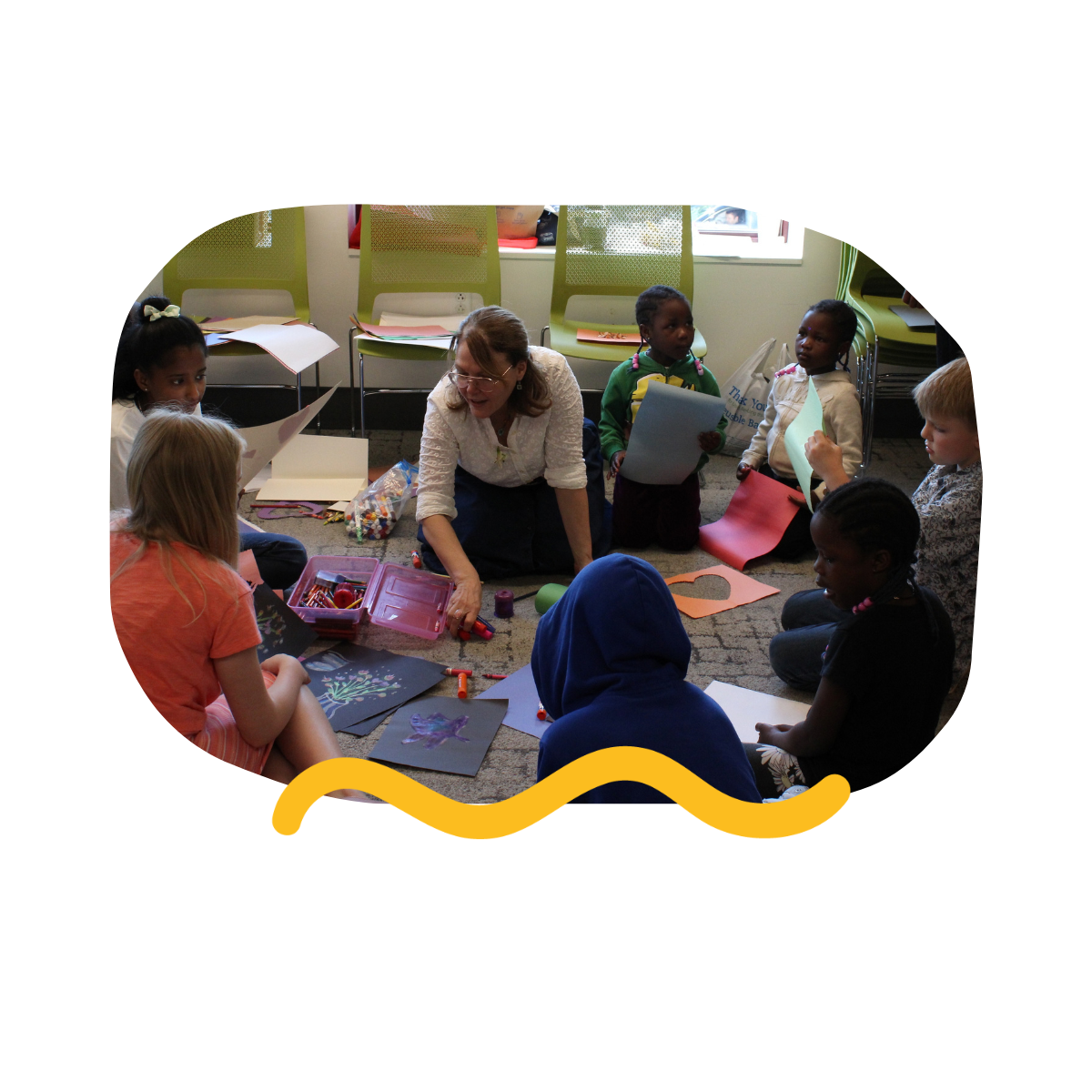
Hello Neighbor, a nonprofit founding member of the HEC, works to support the newest arrivals to Pittsburgh by providing wraparound support for refugee and immigrant families. (Source: Hello Neighbor).
A Funding Strategy Centering Early Relational Health
The bottom line for the Hilltop Empowerment Collective is supporting the strength and dignity of families and children in the local community.
For funders considering this approach, Figlar says, HEC’s strength lies in engaging trusted community helpers and creating space for authentic collaboration around a shared vision. More than any other strategy, she says, centering these relationships reflects the core principles of Early Relational Health.
“These are neighborhoods full of community members and helpers doing amazing things,” says Johns. “Our strength-based approach is grounded in Early Relational Health and supports the relationships among helpers so they can better coordinate resources for families.
“Lasting progress depends on the ongoing attention paid to our community helpers and their relationships with each other. These relationships and a steady focus on thriving families are critical elements toward actualizing our goals.”

This blog post is part of Nurture Connection’s “ERH in Action” series of listening and learning sessions. Our network is full of meaningful examples of people and organizations promoting ERH in their daily lives and work. Our “ERH in Action” series highlights and uplifts stories from various fields to share learnings, challenges, and bright spots in the movement.
Explore More Stories of ERH in Action:
- North Carolina Champions Family Bonds and Infant Mental Health
- Inside Illinois’ Early Intervention Training Program
- Where Joy Lives on Fridays: Celebrating ERH in Action with UCSF BLOOM
- Postpartum Support International (PSI) Makes Peer Connections Core to Perinatal Mental Health
- Promoting Teen Parents’ Relational Health with GLOW Children
- Child First: How a Relational Health Focus Can Drive Practice Transformation