
The transformational power of Early Relational Health (ERH) is its multiplier effect in building healthy, flourishing communities. The development of ERH in infants and children cannot be separated from the broader health of families and communities. In fact, the concept of ERH recognizes that children’s flourishing reflects a collective commitment of families, communities, and society. As Claudia Aristy, Parent Leader, Nurture Connection Family Network Collaborative (FNC) notes, “One of the things that I have really, really enjoyed seeing and witnessing in my everyday work is the healing power that Early Relational Health has on everybody that is involved. . . . That’s how population health happens.”
And so, as we enter 2026, we are optimistic that we will continue to build on what we accomplished in 2025. When we reflect on the past year, three meaningful themes emerge from the work that may offer direction in 2026: 1) advancing new ways of understanding ERH across the early childhood ecosystem; 2) learning and leading with parents; and 3) transforming systems and communities by centering connection.
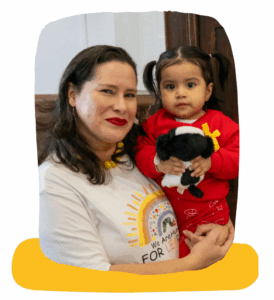
“One of the things that I have really, really enjoyed seeing and witnessing in my everyday work is the healing power that Early Relational Health has on everybody that is involved.
“Whether it’s the parent, the clinician, the parent leader — we’re all healing [from] all that trauma that we carry with us, and we can change the future of our children and their future children.
“And that’s how population health happens and how we have an overall impact in our communities.”
— Claudia Aristy, Parent Leader, Nurture Connection Family Network Collaborative (FNC)
Advancing New Ways of Understanding ERH
Communities, families, and caregivers across cultures and backgrounds have long understood the importance of belonging, connection, and relationships for human development. This diversity means that relational health doesn’t mean the same thing to everyone, and while moments of connection are universal, they are not necessarily uniform. Therefore, there is no single approach to ERH, making the field ripe for innovation and new ways of understanding and thinking. Exciting work in 2025 shows us how we might continue in 2026, through promoting cross-sector research, integrating a collective flourishing perspective, and bringing a diverse cultural lens to ERH work.
Promoting Cross-Sector Research
2025 saw the release of a seminal contribution to advance ERH with the publication of the National Academies of Science, Engineering, and Medicine (NASEM) Consensus Study Report Early Relational Health: Building Foundations for Child, Family, and Community Well-Being. The report connects the authoritative expertise from multiple disciplines and synthesizes the most advanced thinking about ERH. It establishes a shared way of talking about ERH and sets the agenda for the next decade.
In addition, Nurture Connection launched an ERH Science section on the Nurture Connection website to further a holistic relational health frame in early childhood programs, policies, and systems. The curated six ERH science concepts bring together research from a variety of academic and cultural streams of knowledge, including dyadic neuroscience, social-emotional development, flourishing, disruption and continuity in ERH and flourishing, ERH in practice, and longitudinal study of ERH.
Emerging research includes a longitudinal study led by Dani Dumitriu, MD, PhD, director of the Center for Early Relational Health (CERH) at Columbia University and a Nurture Connection Steering Committee member. The research involves evaluating key constructs together instead of separately — including bonding and attachment, emotional availability, maternal sensitivity, and unpredictability and temperament. The international community also saw scientific literature contributions by Deakin University in Australia, which has released 11 research papers on ERH following a 2022 research roundtable with support from the Paul Ramsay Foundation, including a scoping review of ERH and its impact on the developing brain.
Integrating a Collective Flourishing Perspective
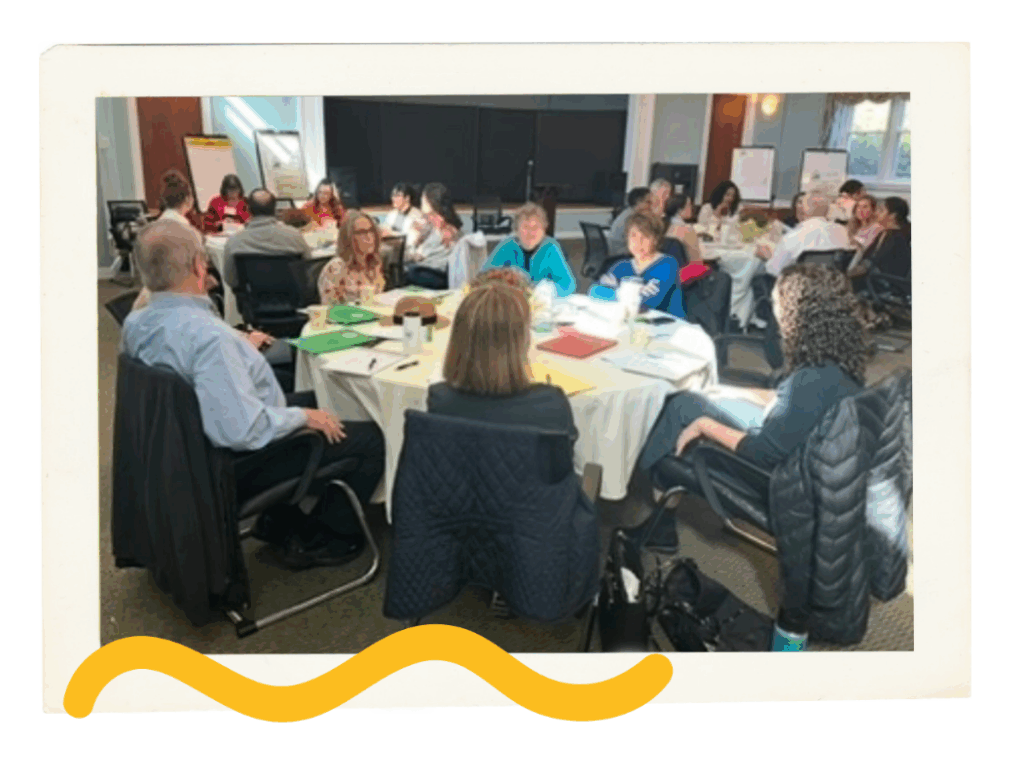
Population data, especially focused on child and family flourishing, is also essential to understand progress for child/family health and well-being and the impacts of early childhood systems building as well as resource gaps. In several ERH in Action stories from 2025 highlighting Bridgeport, Connecticut, we learned how early childhood systems leaders and community leaders use research, data, and analysis to define challenges, determine solutions, and activate community ownership to demonstrate meaningful impacts.
Explore More:
Left: CT 359 members gather for a working group session (photo credit: Allison Logan)
Embracing Indigenous and Cultural Wisdom
Centuries of cultural practices have sustained community resilience, relational health, and generational wisdom. To more equitably and holistically advance ERH in practice, it is important for the field to embrace and promote Indigenous and cultural wisdom and practices in parallel with current scientific knowledge and research.
An amazing example of work in this area comes from Dominique Charlot-Swilley, PhD, a member of the Nurture Connection Steering Committee and a part of the team at Thrive Center for Children, Families, and Communities at Georgetown University, and Marie-Celeste Condon, PhD. Dr. Condon is an independent reflective consultant, helping infant and early childhood educators, therapists, coordinators, and pediatricians weave culture- and strengths-based reflection into their work and organizations. She is a member of the Indigo Cultural Center’s Sankofa IMH History Project Steering Collective, developing films and supplemental materials to affirm communities and help providers look back and inward to revitalize discourse and practices in multidisciplinary fields that serve communities, families, infants, and children.
Dr. Charlot-Swilley and Dr. Condon partnered with African American families and HealthySteps Specialists of Color to develop a culture- and family-centric model known as Early Relational Health-Conversations (ERH-C). The model provides a paradigm shift in working with African American families and possibly other historically marginalized families who are also impacted by structural racism.
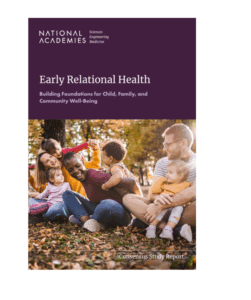
“Nature-based learning and Indigenous frameworks of kinship with land offer relational models for fostering early relational health for some ethnic and cultural heritage groups. These models may be underleveraged in conventional early relational health approaches but may offer important learning for health in other communities.”
— National Academies of Sciences, Engineering, and Medicine, 2025. Early Relational Health: Building Foundations for Child, Family, and Community Well-Being. Washington, D.C.: The National Academies Press. Read the full report here.
Learning and Leading with Parents
Approaches like this center the lived experiences of families and cultural and community wisdom, creating more authentic engagement and enrichment for growing the field of ERH. They raise the importance of thinking in terms of interdependence, mutual reflection, and the promotion of collective well-being — ways of being with families that focus on positive, relational assets instead of what relationships and communities lack from a “helper” perspective. And they also support the concept of “relational abundance” — a mindset and way of seeing and engaging with the world that focuses on the positive relational assets we have instead of what families or communities lack.
Family partnership is built on the premise that if you’re building systems for people, those same people should be part of the design process:

“My personal lived experience and perspective were welcomed. They were validated, and I felt valued as an equal contributor to this work. . . . I was really excited to see changes in my community that I knew were directly informed by the data that I provided from the codesign perspective.”
— Tiffany Solomon, Parent Leader, Reflections from the Power of Codesign in Research: Centering Parent Voices to Learn About Parent-Child Relationships
Reach Out and Read’s CONNECT Survey, a validated assessment tool for assessing the parent-clinician relationship during routine pediatric primary care, is one example of how we can do this — through development processes that center intentional codesign and collaboration between researchers, practitioners, and parents.
The ERH research field is going through a transformation to become more interdisciplinary, egalitarian, and participatory. 2025 saw increased focus on engaging families in the research design process to improve real-world application and integration of ERH practices into health systems. Codesign can be valuable for all participants, as Dr. Dumitriu shares: “I think the most fascinating thing is that [codesign] is a very different way of looking at questions. You’re sort of stuck in one mindset as a researcher. When you have parents and researchers coming together, there’s this fresh, out-of-the-box thinking that happens that is just so exciting and really fun to experience.”
And what we are hearing from families is that they are excited, too. As we saw in our 2025 Nurture Connection Parent Survey, families are embracing the relational framework and healing possibilities of Early Relational Health, with many expressing motivation to share their experiences centering ERH with their friends, neighbors, and colleagues — which underscores the power of parent-to-peer sharing and family ambassadorship. We invite folks in the field to keep thinking about opportunities to bring more parent voices to the table.
Transforming Systems by Centering Connection
Families have many new challenges ahead in 2026, but there are also plenty of reasons for hope. In 2025, we saw several encouraging policy shifts; for example, governments are starting to embed supports for relational health into state healthcare and family support systems, such as in Oregon and Washington, as well as New Mexico. Just this month, New York governor Kathy Hochul and NYC mayor Zohran Mamdani announced a new road map to expand access to childcare in New York City, including a free childcare program for 2-year-olds in high-need areas beginning in 2026, with plans to expand citywide within four years. The state’s goals include expanding childcare to all 4-year olds (also called pre-K) statewide by fall 2028.
As real and concrete economic and health challenges emerge, ERH leaders can help to recast national and state policy conversations, not only to mitigate these challenges but also to elevate a renewed vision of child and family health. As Elisabeth Wright Burak, MPP, MSW, a senior fellow at Georgetown University’s McCourt School of Public Policy’s Center for Children and Families (CCF), notes, “ERH can offer a visionary policy agenda that is solution-oriented, family- and community-grounded, and breaks down the too-familiar silos of health, early childhood education, nutrition, home visiting, and countless others.”
The New Jersey Early Relational Health Coordinating Council shares this vision for how policy can be used as a tool to support collective flourishing. Launching this year, the council will be a statewide entity that partners with families, communities, and systems to build a cross-sector framework that aligns efforts, strengthens resources, and raises awareness in order to create connected, supportive relationships and environments that promote lifelong wellness for all. According to Kaitlyn Mulcahy, Planning Committee Coordinator for the council, this effort was a result of listening to families who advocated for more socioculturally attuned, accessible, and affordable prevention-focused services; increased empathy and relational competence in providers; and less fragmentation and better communication in the systems of supports.

“In New Jersey, we believe that Early Relational Health is everyone’s business, and should be in everyone’s budgets. We are hopeful that a centralized, cross-sector effort that starts with the lived experiences of families will serve to further our goal of promoting Early Relational Health as the common ground and core practice of all family-serving systems in the State of New Jersey.”
— Kaitlyn Mulcahy, Ph.D., LPC, IMH-E®, Planning Committee Coordinator, New Jersey Early Relational Health Coordinating Council
The Early Childhood Alliance (ECA) in New York’s Onondaga County — which includes significant rural communities — is rolling out several promising initiatives in 2026, including a pilot partnership with an ob-gyn office to provide baby bundle boxes for all three trimesters and postpartum as well as training sessions for community partners on early childhood development and family engagement. The organization also hopes to strengthen partnerships with school districts, working with parents and educators to enhance understanding of early childhood development, and support school readiness and lifelong learning.
“We are looking forward to continuing to work with our diverse cross-sector early childhood partners to strengthen our early childhood system,” shares Bethany Creaser, ECA’s executive director. In addition, the ECA plans to present its first annual State of Early Childhood in Onondaga County, a report to be published in March. Creaser says this report will reinforce the importance of Early Relational Health and includes family voice (highlighting RAPID survey data) to inform the ECA’s work.

“We are most excited to continue meeting parents where they are in our community — whether at community centers, pediatrician’s offices, diaper banks, or other trusted spaces. We come alongside families to listen, ensuring that everyone feels seen, supported, and connected. Through these relationships, we provide timely resources, help families navigate available supports, and connect them to basic needs. By prioritizing the well-being of parents and caregivers, we strengthen families, improve children’s health, and help interrupt cycles of generational trauma.”
— Bethany Creaser, Executive Director, Early Childhood Alliance Onondaga
Toward Collective Flourishing for All
As we advance new ways of understanding ERH and co-construct emergent ecosystems of family partnership, how can we approach the work of systems transformation with collective flourishing in mind — centered on values of openness and curiosity as well as empathy, positivity and even joy?
As we move further into 2026, we encourage you to continue listening and learning deeply from each other, and embracing an abundance mindset of cultural perspectives and community wisdom.
By centering connection, caring, and relationships through ERH, together we can strengthen our collective well-being — and build thriving, flourishing communities by braiding impact with opportunity.
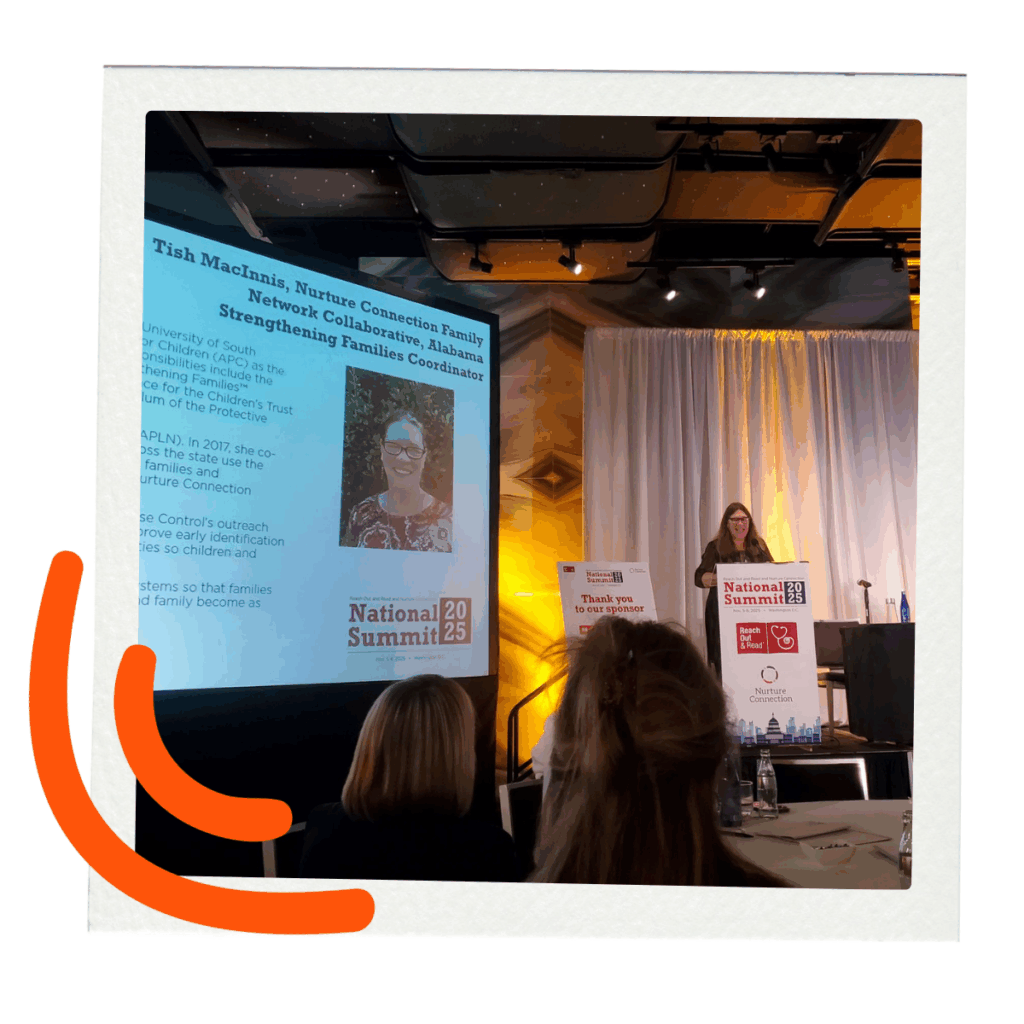
“You don’t have to be a medical doctor at all to do this work. . .
You can just be a person working to help one parent at a time, one child at a time, to change their community — and their world.”
— Tish MacInnis, Parent Leader, Nurture Connection Family Network Collaborative (FNC)
Stay connected with us! Sign up for our monthly newsletter here, and connect with us on LinkedIn.