Nurture Connection
A network that promotes strong, positive, and nurturing early relationships to build healthier, more connected communities.

Early Relational Health (ERH), achieved through positive and enduring emotional connection in the earliest years, is vital for creating the foundation for healthy development and lifelong health and well-being.


Nurture Connection’s mission is made powerful by the generational knowledge that flows through families — shaped by the wisdom and beauty of all cultures and traditions.

Support for the emotional health of babies and children is fueled by a wealth of sources, from foundations and community groups to crusading legislators and investigative reports. There are also pivotal moments that redefine our thinking about Early Relational Health (ERH) and what is possible.
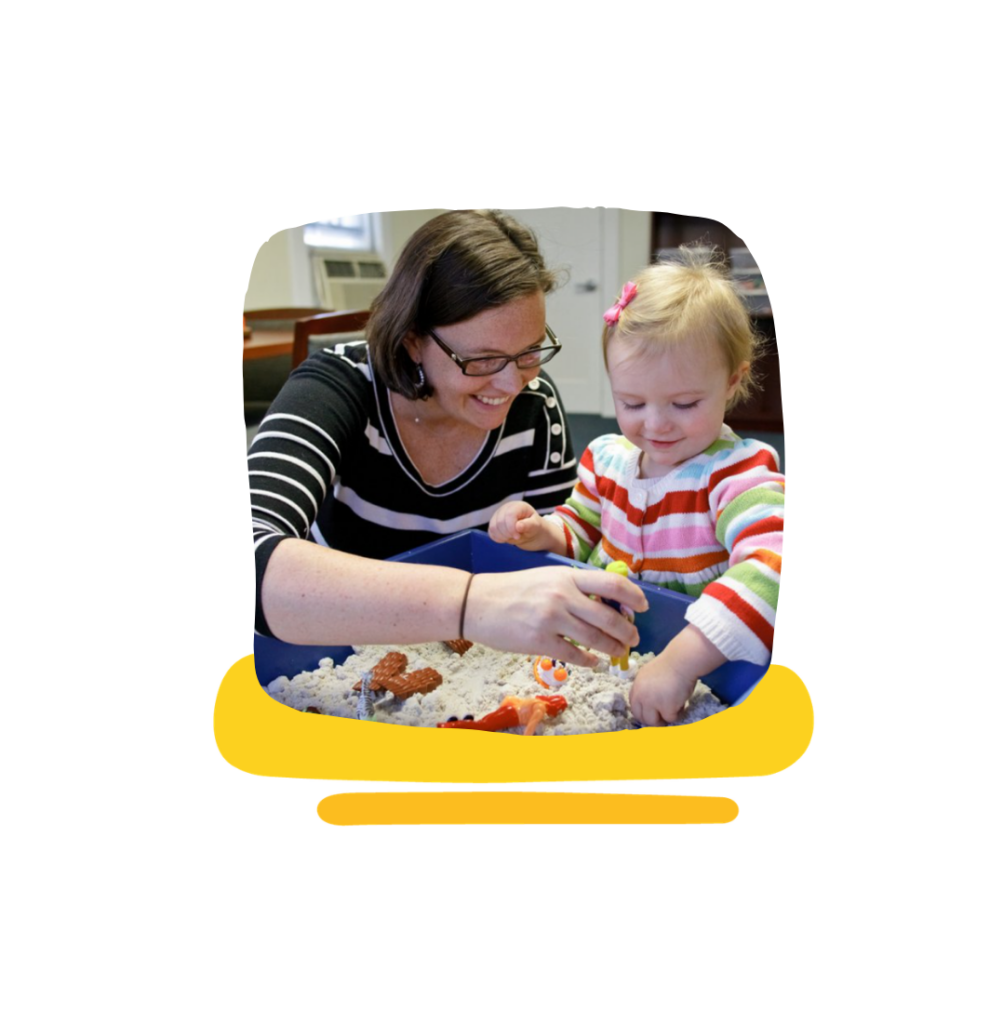
New Jersey is a key example: The state’s funding for early relationships initially came in response to Superstorm Sandy, and gave birth to an innovative state outreach initiative for infant and child health. Read more reflections on New Jersey’s ERH initiatives from Kaitlin Mulcahy, PhD, LPC, IMH-E, who along with her colleagues has taken a leading role in promoting strong, reciprocal bonds between infants and young children and the people who care for them.
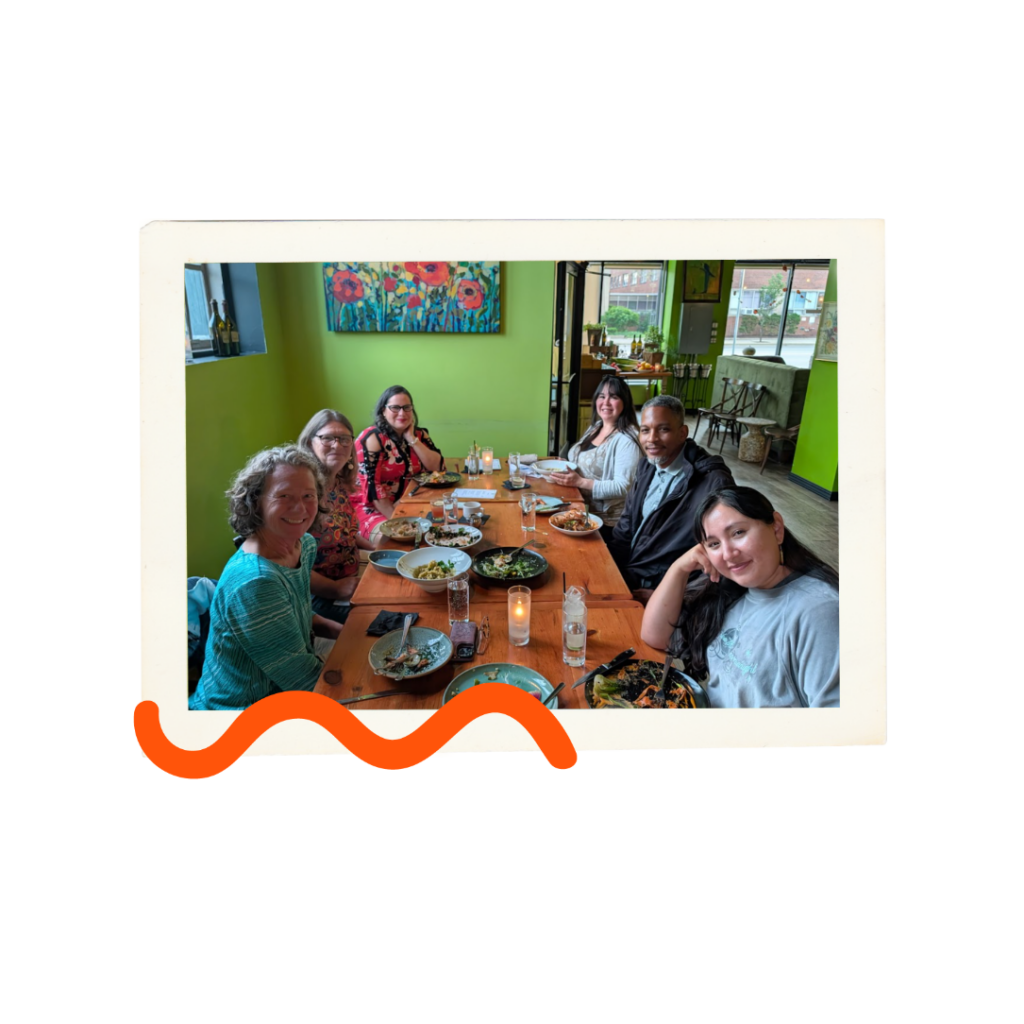
Nurture Connection has long centered parent partnership as a key equity strategy through the Family Collaborative Network. The FNC’s approach is novel: seven parent leaders who connect with families from underrepresented communities to elevate the voices and wisdom of parents and caregivers in the promotion of Early Relational Health (ERH).
Earlier this May, the FNC met in Detroit for two days of group reflection, connection, and sharing. This gathering also marked the first opportunity for the FNC Parent Leader team to come together in person — including members who had been there since the beginning, as well as the two new members who recently joined the group.
The power of storytelling and relationships was central to the gathering, where FNC members had the opportunity to practice sharing their individual journeys into parent leadership, and reflect together on the importance of building community voice and partnering with families to advance ERH.
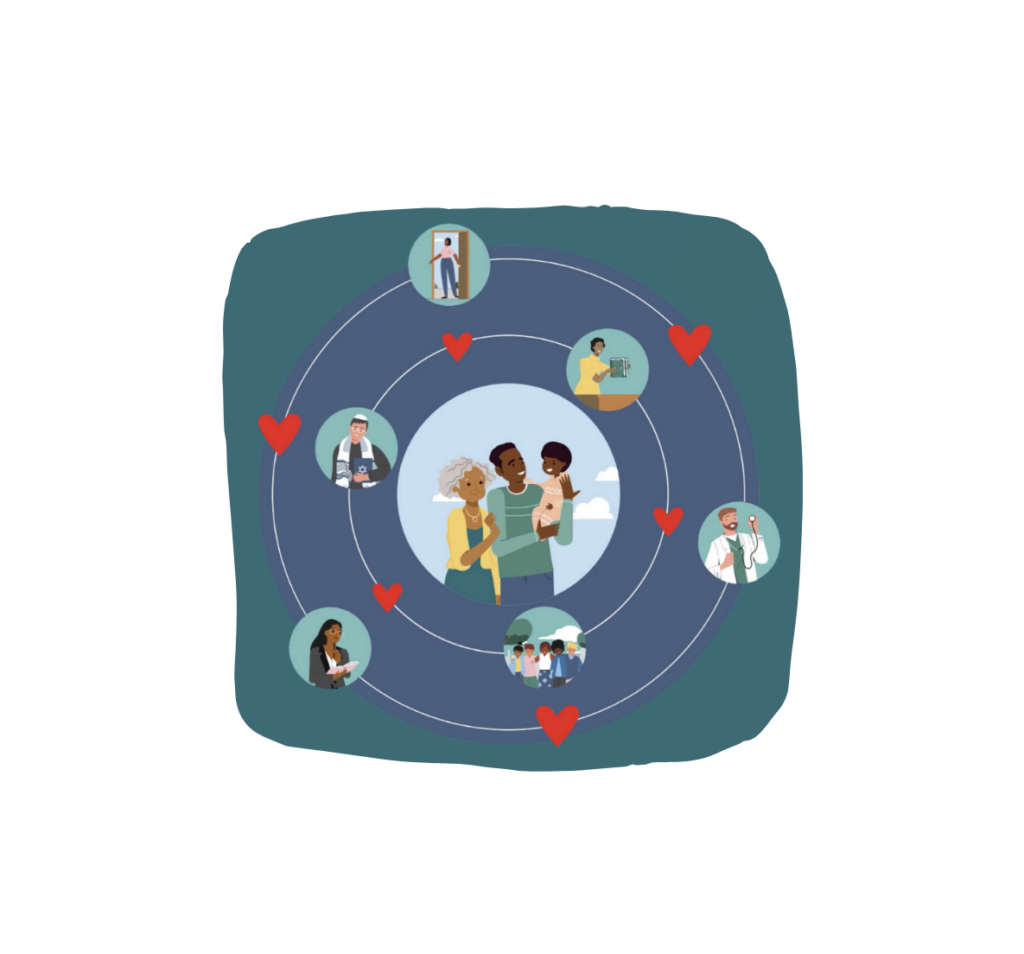
As a field catalyst for early relational health (ERH), Nurture Connection is excited to share this free animated video learning series from our partners at Michigan’s Infant and Early Childhood Mental Health Consultation (IECMHC). The learning series – “Early Relational Health Together” – was co-designed with parent leaders and families to elevate the importance of simple but effective practices and interactions that support healthy relationships between babies, toddlers, and their caregivers.
Explore the full ERH Together Learning Series:
Additional Resources:
Nurture Connection is excited to share a new and exclusive series on Early Relational Health – “The Shock and Beauty of Early Parenthood: Early Relational Health Experts Reflect on Caregiving Journeys, Including Their Own.”
The stories are written by Thelma Ramirez, Ed.M, and Dr. Junlei Li, PhD, of Harvard University, who both work in the field of early childhood and relational health and who are both parents themselves. These narratives offer an intimate glimpse into how skilled early relational health practitioners help families navigate the challenges of parenting, sharing their own obstacles along the way.
The transformational power of Early Relational Health (ERH) is its multiplier effect in building healthy, flourishing communities. The development of ERH in infants and children cannot be separated from the broader health of families and communities. In fact, the concept of ERH recognizes that children’s flourishing reflects a collective commitment of families, communities, and society.
And so, as we enter 2026, we are optimistic that we will continue to build on what we accomplished in 2025. When we reflect on the past year, three meaningful themes emerge from the work that may offer direction in 2026: 1) advancing new ways of understanding ERH across the early childhood ecosystem; 2) learning and leading with parents; and 3) transforming systems and communities by centering connection.

Nurture Connection has identified the Small Moments Big Impact (SMBI) video series as a unique and valuable resource for early childhood practitioners and ERH advocates to share and discuss with families, to make a special connection for the promotion of ERH. Developed by Barry Zuckerman, MD, and Cyndie Hatcher, MD, this series shows what Early Relational Health really looks like and means in action, and offers opportunities for all frontline providers to have meaningful conversations about ways parents/caregivers can develop their understanding and change their behavior to build ERH within their own families.
With the help of parent leaders from our Nurture Connection Family Network Collaborative, we identified the following SMBI videos that exemplify and embody Early Relational Health in action. Each video includes reflection questions for parents and caregivers, which can help spark important conversations and build a special relationship between providers and parents.
The 2025 National Summit in Washington, D.C. was an opportunity for four of the parent leaders from the Nurture Connection Family Network Collaborative (FNC) to gather in person and connect with other early childhood practitioners, advocates, and parent leaders.
In this short video, they shared their experiences and reflections from the summit, including what they are most excited to bring back to their communities as they continue to work to advance Early Relational Health for children and families.
On October 1st, 2025, the National Academies of Sciences, Engineering, and Medicine (NASEM) published the consensus study report Early Relational Health: Building Foundations for Child, Family, and Community Well-Being.
NASEM’s landmark recognition of ERH is a clear validation — and a major boost — for the work so many are leading in early childhood ecosystems across communities, including members of the Nurture Connection’s National ERH Network. Their work of centering Early Relational Health in systems, communities, and families is reshaping the health and well-being of children across the country.

Community by community, we are building a networked and engaged movement in partnership with parents and families.
Through our collective commitment and effort, we can make sure that every child is cared for and valued, every family is supported and heard, and every community is made stronger through positive and enduring emotional connection.


By focusing on the safe, stable, and nurturing relationships (SSNRs) that buffer adversity and build resilience, pediatric care is on the cusp of a paradigm shift that could reprioritize clinical activities, rewrite research agendas, and realign our collective advocacy.
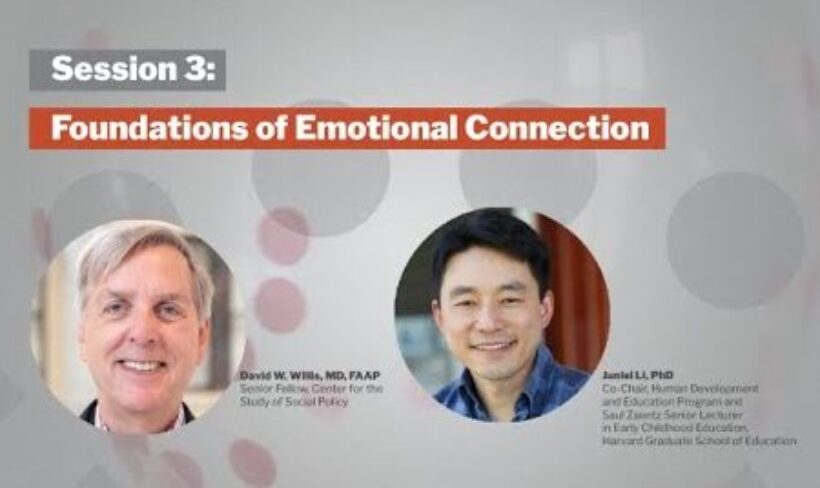
“The Perspectives on Early Relational Health” series brings together a diverse group of parents, pediatricians, researchers, and providers to share their perspectives on why Early Relational Health matters and what they are doing to support and promote foundational early relationships. In the “Foundations of Emotional Connection” session, David Willis, MD, speaks with Dr. Junlei Li (Harvard Graduate School of Education) about the mutuality, or bi-directionality, of early relationships and what these healthy early relationships can look like across cultures and contexts.
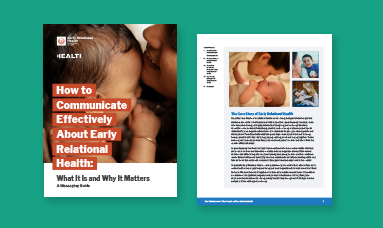
This guide is meant to be a tool to help the many voices supporting and working on Early Relational Health to speak the same language and spread awareness, spark interest, advocate holistically, and accelerate change.