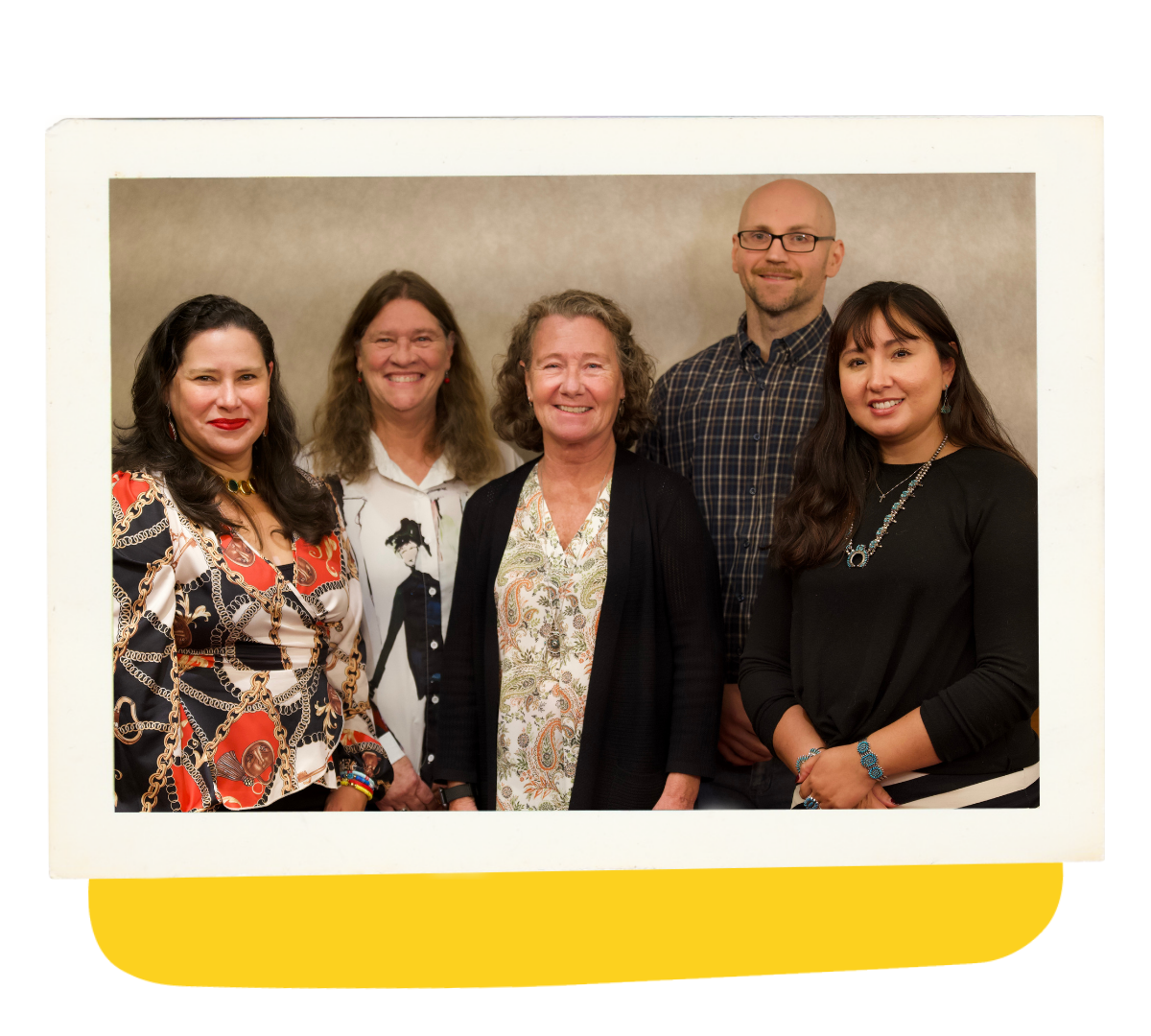
(above): Nurture Connection Family Network Collaborative (FNC) members gather at the 2025 National Summit in Washington D.C.
From left: Claudia Aristy, Tish MacInnis, Bryn Fortune, Steven Thibert, and Nicole Loveless.
This February, we celebrate three years of Nurture Connection – and honor the critical advocacy role that parent leaders play in advancing early relational health (ERH) by connecting directly with families and communities. As part of National Parent Leadership Month, read more about the amazing work of the Nurture Connection Family Network Collaborative (FNC), and how this framework of parent-led partnership continues to help us keep family voices at the forefront.
Partnering with families and parents in our Family Network Collaborative to promote Early Relational Health is not just important. It’s essential.
Over the years, families have told us that they’ve long wanted to have a voice in what matters to them and what’s most important for their children and their families. Many of the systems and policies that were built to serve families and their well-being have a weak spot — they do not involve parents in the ongoing design and delivery of those services. As Bryn Fortune, Nurture Connection Ambassador for Parent Partnership, reflects, “the real power is in listening to families and the expertise that they bring. . . . If we don’t honor that expertise, we will never be able to meet them in an effective way.”
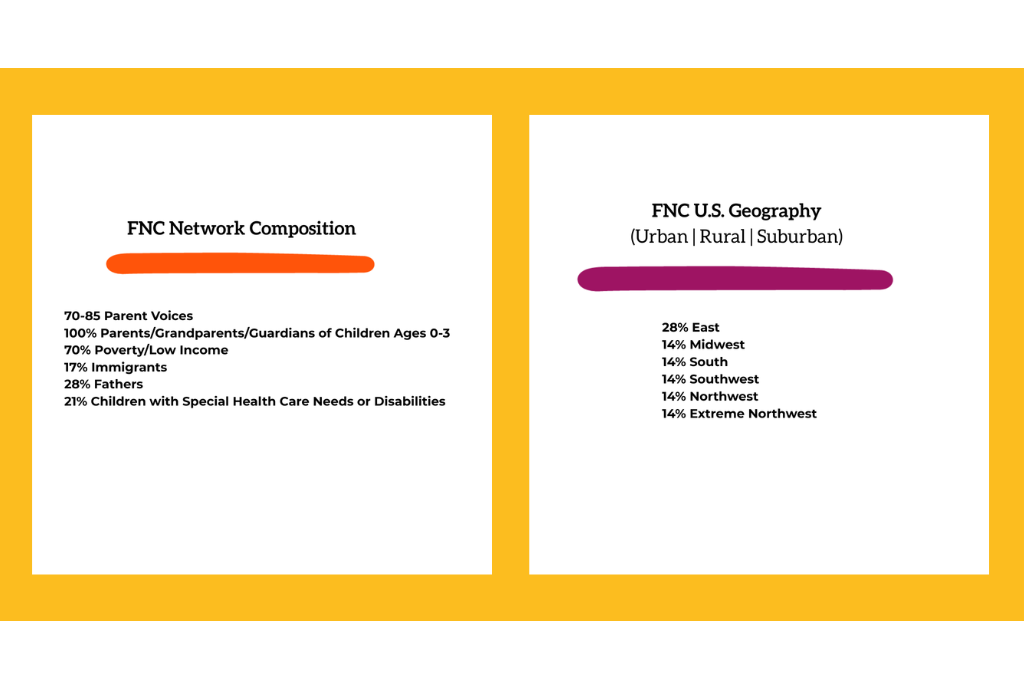
Holding the belief that systems change must be designed by a community — not for them alone — as its core value, Nurture Connection from its inception has centered parent partnership as a key equity strategy, leading to the creation of the Nurture Connection Family Collaborative Network (FCN) to elevate the voices, wisdom, and expertise of parents and caregivers in the promotion of Early Relational Health (ERH). The FNC framework is novel: seven parent leaders representing a diversity of experience and cultural traditions who work with families from underrepresented communities across the country. It is also the culmination of 35 years of grassroots efforts to transform systems. Now, on the third anniversary of Nurture Connection as a catalytic network, we are thrilled by the efforts of our robust family leadership team working to promote ERH — one in which parents have taken their rightful place at the table.
Parent leadership empowers parents from underrepresented communities to directly speak for themselves, using their lived experience to guide work on Early Relational Health to help ensure that their expertise as parents and caregivers is valued and that their needs are met. In growing its parent leadership, Nurture Connection has been intentional about identifying parent leaders who are able to elevate voices from the communities with the most to teach us — voices seldom acknowledged or heard. These seven parent leaders work with a lively community of 70 families that include parents and caregivers from the rural South as well as immigrant, Black, Native American, and the disabled and special needs communities, building relationships based on trust and shared values.
Besides interviewing each of the 10 families that they work with monthly, the parent leaders bring the voices of their families to help guide all aspects of Nurture Connection’s work. The group is facilitated by Fortune. “Parent leaders are constantly learning from families and each other, and I’m also learning from them,” she says. “We’re on a learning journey together.”
The importance of family partnerships in Early Relational Health is underscored in Early Relational Health: Building Foundations for Child, Family, and Community Well-Being, a 2025 consensus study from the National Academy of Sciences, Engineering, and Medicine (NASEM), which stresses the need for safe, nurturing relationships, family resilience, and connection.
“There’s a recognition of the importance of partnering with families and communities to reimagine child and community services, with ERH at the core,” says David W. Willis, MD, FAAP, Nurture Connection’s founder and director and a professor of pediatrics and psychiatry at Georgetown University and chair of the NASEM ERH consensus study committee.
Willis has long wrestled with a perplexing truth: The United States may be the richest country in the world, but its children are struggling, with nearly a quarter failing to flourish. But the solution is within reach, he and his fellow authors declare in the report: It requires transforming the early childhood ecosystem — in partnership with families — from one that delivers services into one that centers relationships. In particular, the report recommends cultural humility, which “invites [early childhood] practitioners to slow down and listen with compassionate curiosity and openness while creating space for co-learning and discovery with families and communities.”
The report drew on a groundswell of research that focuses on how strong, positive, and nurturing relationships in children’s earliest years serve as the foundation for healthy development. Willis was eager to spread that message to families as well as early childhood systems practitioners and leaders. In 2023, as part of the Center for the Study of Social Policy (CSSP), he founded Nurture Connection as a national catalytic network to promote ERH with parent partnership embedded in its mission: “In partnership with families and communities, Nurture Connection is building a networked and engaged movement to promote Early Relational Health for every family and in every community.”
On a Learning Journey, Together
The growing importance of parent partnership in the early childhood ecosystem hasn’t been a straight line, but a journey marked by many stepping stones, intersections, and cross-sector collaborations. It stretches back to the early days of home visits in the state of Michigan and successful campaigning in the 1980s to bring parents to the table, with seats on coordinating councils for state agencies.
Fortune, who serves as facilitator for the FNC, was involved in early childhood collaborative efforts to develop a Parent Leadership Program in Michigan, which supported parents who went on to join local and state interagency councils established by an expansion of the Individuals with Disabilities Education Act (IDEA) called Part H.¹

“In all of this iterative work [of learning from families], it was always, What’s the gap?
It’s not enough to have only a few parent leaders [who represent only their own experiences] — you’re missing out on the vast experience of other families who have had less opportunity [to share their experience]. . . . All of our perspectives change with the more opportunities we have.”
— Bryn Fortune, Nurture Connection Ambassador for Parent Partnership
The Michigan Interagency Coordinating Council was one of the first such state interagency coordinating councils in which the inclusion of family voice was federally mandated, through council membership roles held by parents. This work gained more traction in the 2010s, when parents were brought in as partners on a federal home visiting program, the Maternal, Infant, and Home Visiting Program, overseen by the Human Resources and Services Administration (HRSA).
Philanthropic leaders also stepped up to support strategies for building parent partnerships, including the Heising-Simons Foundation, which held a national gathering for people involved with home visits as well as those who shared a similar approach to family partnerships. “That helped create a national network for all the partners in the ecosystem to have a place of conversation and learning,” says Willis, noting that a mantra popular among parent leaders at the CSSP was “Nothing about us without us,” a phrase popularized in the 1990s by activists in the disability rights movement.
Nurture Connection was born out of this inclusive vision — and the new ways of seeing that are possible when parents, researchers, and others in early childhood roles collaborate together on creating solutions to support families. “I think the most fascinating thing is that [codesign with parents] is a very different way of looking at questions. You’re sort of stuck in one mindset as a researcher,” says Dani Dumitriu, MD, PhD, an associate professor of pediatrics and director of the Center for Early Relational Health at Columbia University, and a steering committee member with Nurture Connection. “When you have parents and researchers coming together, there’s this fresh, out-of-the-box thinking that happens that is just so exciting and really fun to experience.”
Here, we share some of the voices from our parent leaders involved with the Family Network Collaborative about how critical parent voices are in the promotion of ERH.
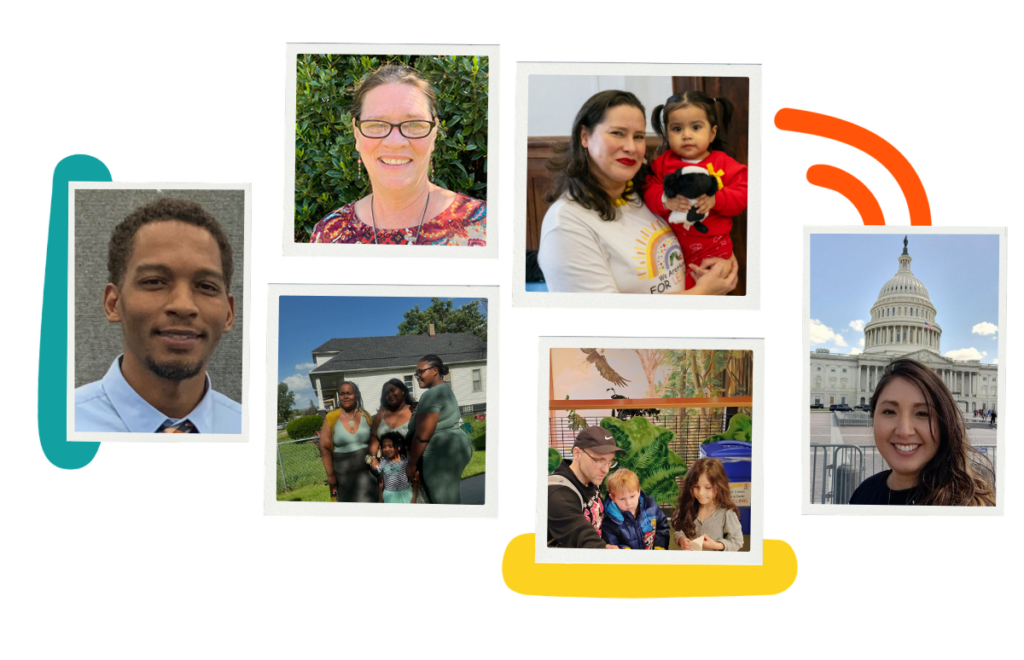
Developing Authentic Partnerships with Families
For parent leader Mia Halthon of Michigan, the way to encourage authentic partnership with families is meeting parents where they are. If they can’t understand what you’re saying, she says, you’ve failed. That’s how the FNC came up with the idea of “living room language,” which makes concepts accessible and approachable, she says. “In my personal experience, it’s been so enriching and gratifying to know that families actually feel heard, that they feel like they’re truly part of the work.”
Fortune says she loves working with “the dream team” of parent leaders in the collaborative. “I get to learn regularly [from our FNC families] — they teach as we ask inquiring questions that they translate into ‘living room language.’ We learn from those voices; our parent leaders learn from those voices.”
As one example, the members of the Family Network Collaborative points to a survey they sent to 96 members of the Nurture Connection FNC that had a 65 percent response rate, compared with the typical 20 to 30 percent average response to nonprofit surveys. “Our response rate was so high because of the relational aspect,” one parent leader says. “The trust that we’ve built with these families throughout the years is one of the reasons we got such a great response.”
The survey found that parents involved were embracing Early Relational Health and that a peer-to-peer approach “is highly effective” for spreading its concepts to families. Not only were 67 percent of the families in the Family Network Collaborative familiar with the term “early relational health,” but also 74 percent reported their familiarity with ERH has changed the way they relate to their child “a great deal or a moderate amount,” and 66 percent were motivated to share what they had learned with other families.
Although the parent leaders reported that some families had never heard of the term “early relational health,” they were far from discouraged. Instead, they rejoiced that any talk about ERH in their communities was largely a direct result of their work, and they saw that as more incentive to spread the word.
“Being a part of this initiative, families felt like it really made a difference … especially in my [Black and Brown] community,” one parent leader says. The parents they worked with “have learned things that they weren’t able to implement with their older children, but now they are with their younger children and are now able to also go back and still use some of the methods or even integrate and bond with their older children. … It’s become a whole family approach, where the whole family is involved in Early Relational Health, and the bonding and connection. It’s really made them closer as a family, even their extended family.”
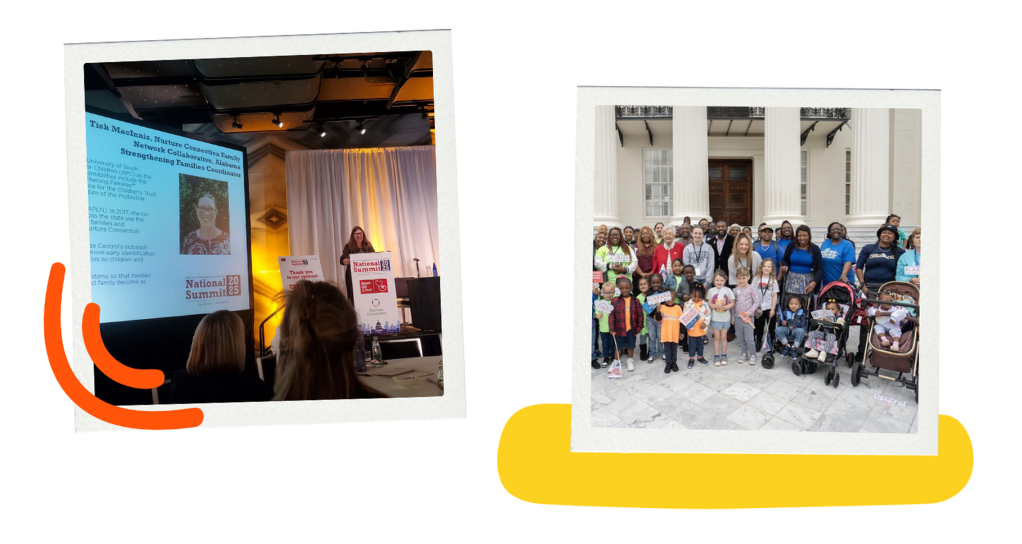
(left) Parent leader and Nurture Connection FNC member Tish MacInnis presents at the 2025 National Summit in Washington, D.C.; (right) families gather at the Alabama State Capitol as part of a Strolling Thunder Alabama family event.
How people approach families about Early Relational Health is also crucial, according to parent leaders in the Family Network Collaborative.
“My advice to parent leaders: Be authentic and lead with curiosity,” says Claudia Aristy, a parent leader with Nurture Connection’s FNC and director for the Reach Out and Read program at Bellevue Hospital in New York City. “Always ask the questions that come from your heart, share your story, ask [the parents and families you work with] to share their story and find the commonality between your stories so that they feel they’re not in this alone, but that we’re all in this together.”
When she works with women and children, Aristy points out, she is not only telling them about how to read to their baby and sing and talk to them, but connecting them with all the other services they can receive at the hospital. “Or the services at their local library — they even have a story time for babies, English classes, computer classes. When you explain all of the different services available, they cannot believe it.”
Aristy adds that she immigrated from the Dominican Republic and works with many families from South America. “Our immigration stories might be different, but we all came to this country because we had a dream, a hope of a better future for our children. And that’s what brings us together, and we can find that common ground in what we want for our children.”
Looking Ahead
The Nurture Connection Family Network Collaborative is expanding its reach this year by adding two new parent leaders. Nurture Connection is also deepening its connection to families by building an ERH learning collaborative with communities around the country that are adopting the framework of ERH through a “three-legged stool” approach for advancing ERH in communities — by bringing together child health champions, local early childhood systems leaders, and family partners.
What’s most gratifying is that more and more people see that parent partnership is core to the transformation of early childhood ecosystems — and that more attention and support are needed. The Nurture Connection Family Network Collaborative is proud to be part of this grassroots-led transformation that is centering community and Indigenous wisdom alongside academic and professional expertise to build flourishing communities and a voice for parents for generations to come.

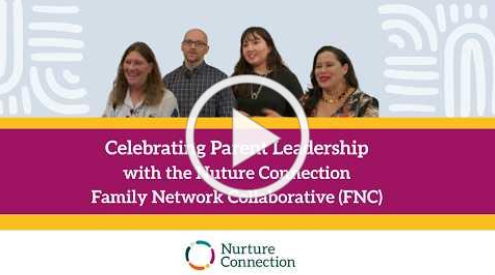
Hear more from Nurture Connection Family Network Collaborative (FNC) parent leaders in this video, as they share their reflections and insights on the meaning of Early Relational Health (ERH). They also discuss what motivates their work and offer advice for other parent leaders dedicated to advancing ERH and the transition from transactional care to relational care.
¹ Established in 1986, Part H of the Americans with Disabilities Act (ADA) required states to begin providing early intervention services to children with developmental disabilities from birth up to age three (as part of an expansion of earlier IDEA legislation passed in 1975). The ADA, which established civil rights protections for those with disabilities, would be passed four years later, in 1990.
Stay connected with us! Sign up for our monthly newsletter here, and connect with us on LinkedIn.